Subscribe on Apple Podcasts, Spotify, Overcast, Amazon Music, YouTube, or wherever you listen to podcasts.
This week, on Crash Bang:
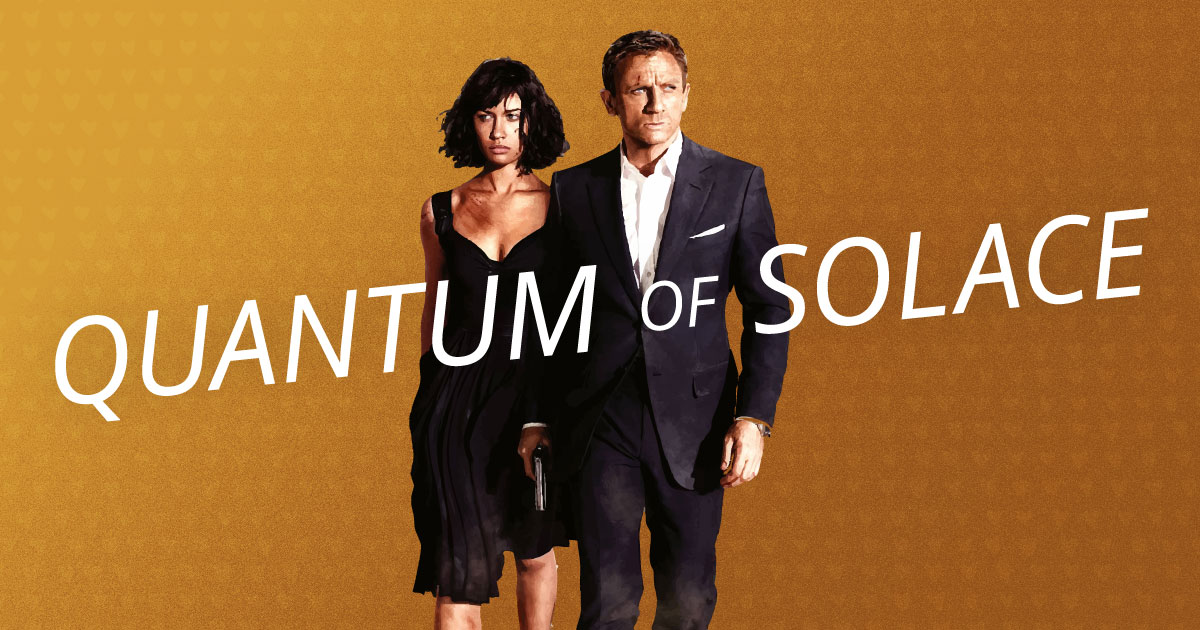
Joe and Greg laugh harder than they ever have discussing a basically perfect movie: Incredible action scenes, fantastic performances, and maybe no script? This is the shortest and potentially most entertaining James Bond movie, except for the other ones that are much, much better.
And listen… Sometimes the conversation that needs to be had takes a while. In this case 40 minutes longer than the actual film. But after you listen to this episode you, dear listener, will know everything that you need to know. Play along with our drinking games and important questions and just enjoy the ride…
Joe’s Back of the Box
James Bond (Daniel Craig) must fight a secretive organization controlling the world’s resources all while trying to mend his broken heart. The action spills into the streets, waterways, and iconic landmarks. James Bond is back and fighting for justice across the globe in this nonstop action movie that is shaken but never stirred…
The REAL Back of the Box
Somehow a movie that centers the action and has only the loosest of plots is still confusing. The movie jumps all over the world with no explanation or real need to but, also, here I am lamenting the lack of a plot in a James Bond movie? Daniel Craig is second only to early Sean Connery as James Bond, so ignore the plot and enjoy this movie for what it is – an actionfest with possibly a few too many quick cuts intruding into the action scenes. Play along with our drinking games and I can almost guarantee a great time…
Note: This transcript has been auto-generated, so… You know… It’s not our fault.
Greg: Joe in the movie we watched this week, James Bond was played by Daniel Craig, and when we lived together, we would sit in our living room. We would listen to the Beastie Boys. We would probably be eating some ice cream out of the carton like Ben and Jerry’s.
Joe: That’s right.
Greg: And we would ask each other questions like this. How do you rank the actors who have played James Bond? Worst to best. So I ask that to you today. How do you rank the James Bond actors?
Joe: All right. I might forget some of their names, but I feel like worst to best. This is my order. Capitalize on B. I played it one time on Her Majesty’s secret service. Yep. It was an okay one. I’ve only seen it once. A long, long time ago. Maybe twice. Yeah. Have very little recollection of that movie. This is where it gets tight.
Joe: Because I feel like both Timothy Dalton and Pierce Brosnan had their moments.
Greg:
Joe: You know, maybe one good movie each one and a half. But I think I have to go Timothy Dalton.
Greg: Okay.
Joe: Then Pierce Brosnan, Roger Moore and then Daniel Craig. Early Sean Connery I tried to talk myself out of Sean Connery and into Daniel Craig because I think, yeah, I think he’s really close. It’s like one one be for me.
Greg: Yeah. Yeah.
Joe: I can’t do it. And I know that most of that is tinged in nostalgia of when I watched these as like a kid.
Greg: Sure.
Joe: Honestly, the first movie I saw was A View to a kill.
Greg: Oh, wow. Roger Moore.
Joe: Roger Moore.
Greg: His place in the Bay area.
Joe: Yeah. And I had never seen anything like it. That was back in the day when we didn’t have a VCR. And you went to the video store? He rented a VCR. Yeah. And the VHS or beta, whatever it was. And it was like someone had just opened my eyes to what movies could be.
Greg: Totally.
Joe: And I proceeded to watch every single James Bond movie. Not an order, but just like whatever was at the video store. So I turned it around to you. Greg, what is your order? Worst to best.
Greg: Okay, well, as all of my lists go, this could change daily. So as of today in the holiday season of 2024, by the way, nothing says the holidays like James Bond, obviously. Obviously started strong with a day or two with the second best Christmas movie, and we’re continuing that with James Bond. All right. So today I’m letting my emotions take over last place Pierce Brosnan.
Joe: Wow. Okay.
Greg: Then George Lazenby, then Roger Moore, then Timothy Dalton Daniel Craig. And you have to go Sean Connery. No one is going to disagree with us on this one.
Joe: Now the top two are locks to me and the top one.
Greg: Absolutely, absolutely.
Joe: And I can move it around, too. I’m not the biggest fan of Roger Moore, but I also have a soft spot because it was my first James Bond. Sure, sure. He’s a little higher. Yep. Me too. Pierce Brosnan GoldenEye. That movie. The video.
Greg: Game. Incredible.
Joe: But then the rest of them.
Greg: So it’s a little rough, a little rough. I maintained I’ve said this before on the show. He was great, but the movies and the scripts were horrible. He did the best he could. I think On Her Majesty’s Secret Service. This is a banger. I think that’s a great movie. It’s been appreciated more in recent years. But it’s I mean, it obviously has some problems, but it is a much better movie than people remember.
Greg: You know what? I’m going to change it. Lazenby has to be last place. Even though that movie’s good. He’s not great. He’s not even an actor. Yeah. Okay, so second list from today already.
Joe: It’s changed.
Greg: It’s already changed. This might be a preview of tomorrow’s list. Lazenby. Last place, then Bronson, then more. Dalton. Craig. Connery. All right. We have so much to talk about. Let’s get to the show.
Joe: Let’s do it.
Clip: I was always very interested to meet you. Are you going to tell us who you work for? The first thing you should know about us is that we have people everywhere. I thought I could trust you. You said you weren’t motivated by revenge. I’m motivated by my duty. I think you’re so blinded by inconsolable rage that you don’t care who you hurt.
Clip: You strip Bond’s movements, put a stop on his passport, find bond. How long have I got? 30s. I just give him a lot of time.
Clip: To do.
Greg: It’s the Mission.
Clip: Impossible two of the Daniel Craig Bond films in 2008. Director Mark Forester joins producers Barbara Broccoli and Michael G. Wilson to make Quantum of Solace.
Greg: We needed measurements for solace. According to this movie, we are talking about just a murderer’s row of people in this movie and people returning from previous bond movies. We’re talking about Daniel Craig, Olga Kurylenko, who he loved in Black Widow. The Dame Judi Dench. We’re talking about Gemma Arterton, Jeffrey Wright, David Harbor as a character named, I don’t know, Johnny Milk Mustache.
Greg: I don’t know his name, but it had to include mustache. Yeah, we’ve got Glenn Foster as Mitchell. Mitchell played a key role in this movie. I think that’s all I’m going to say. Oh, we have. I don’t know how to pronounce his name. Matteo Amalric, a French actor, I believe, as the bad guy. Dominic Green. Joe Skye Tucker.
Greg: What makes Quantum of Solace a great bad movie?
Joe: It has great action. Yeah. I feel like before we really dive in and I think, you know, a little bit more of the backstory on this, but this is, I think, taking place during the writers strike.
Greg: Film during that. Yeah, yeah.
Joe: And it shows because there is.
Greg: Not.
Joe: A coherent story. And let’s be frank, about a James Bond plot. It doesn’t need to be much. They’re not held together by a lot. But this movie pinballs across the world. Yep. From location to location to action sequence to action sequence that are not tied together in any appreciable way other than they’re fun to watch.
Greg: Sure.
Joe: So knowing all of that, it’s a great bad movie because you start with a great car chase that suddenly we’re on the taken set of all of a sudden and then not and then.
Greg: And Italy, I think. Are you talking about the construction set? Yeah, I totally have the exact same note. You’re not a movie in 2008. Yeah. Jack Reacher, we got taken. You are not a movie unless you are suddenly driving onto a construction set. Yeah. That’s amazing.
Joe: So many great bad shots in this. So it’s hampered by the fact that you don’t quite know where you’re going, why people are fighting, why people are being picked up in cars and how they even know who they are.
Greg: Sure, sure.
Joe: But it is all buoyed by really strong action sequences. Yeah. So it kind of just even for James Bond movies, shut off your brain. Don’t ask a question. Don’t go like, wait a second. Where why are we in Havana? Or why are we in Austria? Or wait, why? Or how do we get to Italy? Don’t know. Stop asking any of those questions and lean into it.
Joe: Yeah. So, Greg Steinhardt, why is Quantum of Solace a great bad movie in your mind, or a great movie, or bad movie or all of the above?
Greg: This is just an incredible, absolutely incredible movie in so many ways. And I think it’s universally known as the worst Daniel Craig James Bond movie. That’s why I call it the Mission Impossible two. That being said, we love mission Impossible two, and this movie is better than Mission Impossible two in my mind. Agreed. So it’s the worst bond movie with Daniel Craig, but it’s still just there’s so many talented people working on it and they’re all at like, the peak of their talents.
Greg: Like, I’m thinking about the producers who who rebooted the franchise, thinking about Daniel Craig, who is returning in his second movie as bond director Marc Forster of Finding Neverland and Monster’s Ball fame. He also made Stranger Than Fiction with Will Ferrell and Maggie Gyllenhaal, a movie that I love. It’s really sweet. World War Z, a movie I’m pretty sure we’re going to get to World War Z for sure.
Greg: A great bad movie. This is, I mean, potentially at the time, the most beautiful James Bond movie that had ever been released.
Joe: Yeah, I would agree with that.
Greg: Cinematographer Roberto Schaffer just killing it. And then, especially, especially, especially the second unit director Dan Bradley of The Bourne Supremacy and The Bourne Ultimatum and The Bourne Identity kind of made them reboot the James Bond series early, like they were working on a fifth movie with Pierce Brosnan. And when The Bourne Identity came out, they just said, we can’t do it.
Greg: We got to start this thing over. That’s what kind of prompted this whole refresh with Daniel Craig. Oh, and when they were filming in Panama, their second unit director was Simon Crane, who we’ve always already praised in the Edge of Tomorrow episode. He was the guy who said, it’s impossible to work with that director, but we figured it out.
Greg: And so there’s just so many people who are at the top of their game. Well, I guess I will also just say every time I’ve watched this movie multiple times, I’ll say, oh my gosh, this movie is amazing. It’s just so good. Like the action scenes are so, so I mean, they’re a little bit shaky camera. A little bit too much Bourne going on there a little bit Paul Greengrass influenced.
Greg: There’s a little bit of theory about that from Dan Bradley. But I’ll still take it. It’s really kinetic. Great energy. Daniel Craig’s performance as bond again incredible. It’s a very streamlined movie. There’s no queue. There’s virtually zero gadgets. There’s no Miss Moneypenny. It’s really just only the people that need to be in the movie are in the movie.
Greg: And only the bond traditions that need to be in the movie are in the movie. There’s no he never says the line bond, James Bond. It’s very streamlined. But then it’s also just a fascinating movie when it comes to the creative process. What happens when you take a writer out of the scenario and you leave all of the writing after a first initial draft?
Greg: Well, okay. The story of the screenplay was, I think, the guys who had written the last few and the next few, Purvis and Wade, were their names. I think they came up with like an outline for the movie, and then they gave it to Paul Haggis, who had written Casino Royale writer director Paul Haggis. He did a draft that he finished and turned in two hours before the writers strike started.
Greg: So his first draft was what they filmed this movie on, and they changed it throughout. And by they, I mean Daniel Craig and Mark Forster. And so it’s really rough plot wise a lot of the time. Some of the scenes, unlike the dramatic scenes where they’re just conversations between two people, pretty good. But when it’s like exposition, like, we need to get to a different country and go to another set piece, it is said as quickly as possible.
Joe: It’s, that’s a kind description of how. We get around some of these things. My favorite part of this movie happens very early on. So basically you have the opening chase scene and then car chase and the car chase, and then, you know, they’re trying to kill em. And there’s a bodyguard. Her bodyguard is,
Greg: Yeah.
Joe: So we have all of this kind of happening, and I’m like, I’m all in. Yeah, absolutely. There’s another chase scene on foot, and then there’s a horse race happening. Awesome. I’m all in. They kind of discover that they need to get to Haiti. So he goes into a hotel room, has another fight with somebody in the hotel room.
Joe: Yeah. We have no idea who this person is.
Greg: Yeah.
Joe: He, like, put something on his arm, put a jacket on and walks out. And then Olga Kurylenko pulls up and they get in. Yeah. I have no idea how she knows to pick him up.
Greg: Right.
Joe: Turns out that the person in the apartment that he just fired and killed was there to kill her. Right. And then there’s a car chase and then a motorcycle chase, and then we’re off. And it’s just. There is no explanation of how she knew who to how to pick him up. And then she goes down to the waterfront to the, where we meet the bad guy for the first time.
Joe: Right. And he follows on the motorcycle after a car chase after she tries to shoot him. And that’s basically the basis of their relationship. And then after all of that he tries to save her.
Greg:
Joe: When she is potentially going to be a hostage of the deposed Bolivian general.
Greg: Right.
Joe: Yeah. So if you can follow all of that. That you’re better than me because I took me two times watching it to figure out what the hell was happening in this movie.
Greg: I mean, nobody caught that the first time. Yeah. What was going on there? Yeah. No.
Joe: So it’s awesome. And also completely ridiculous. Another one of my favorite parts. So after we have that and he saves her and there’s a boat chase. I mean, the beautiful thing about this movie is, like, every four minutes there’s another action scene.
Greg: Yeah.
Joe: Yeah. Totally. They’re they’re all perfect and awesome. Then he’s got to go to Austria, to the opera.
Greg:
Joe: Where he miraculously finds a bad guy.
Greg: Yeah.
Joe: Puts on. And I have added a new trope when you put on just like the clothes of somebody else or a uniform and they fit perfectly like they’re tailored.
Greg: Yep.
Joe: Do him an ear piece so he can hear the bad guys.
Greg: This is the second time he’s stolen some of these clothes. And they fit, by the way. Yeah, exactly. Yeah.
Joe: So, so much has happened with it, and it just they just kind of just relax, lean into it and just, like, go. It is so bonkers.
Greg: Exactly.
Joe: And he’s. He takes a boat to Italy from Austria. And I looked at a map. Austria and Italy border each other. But there is no waterway to Italy from where he was nowhere. One that is on the Mediterranean Sea. Amazing. Are they? So all of that is to say, this movie is spectacularly ridiculous and all the best kind of.
Greg: Ways James Bond goes the long way is what I hear you say. Yeah.
Joe: And I know I was supposed to remember who that character was from Casino Royale, and I have not seen that in a long enough to remember exactly who he was. Right. Basically, he’s exiled Mathis Island. Yeah. Mathis on that? Yeah. Somewhere in Italy. And decides to join James Bond as they then go to Bolivia from there.
Greg: Right.
Joe: So I think, yeah.
Greg: The next stop. Yeah. And that’s it. We’re done. This is a great episode. Yeah. The first 15 minutes of this movie is two incredible action scenes and a little bit of dialog between the bad guy from the first movie. I think Mr. White, what’s his name? We should say that this movie takes place, like minutes after Casino Royale ends, and he does this whole car chase.
Greg: That’s pretty great. I feel like the new floor, the new rock bottom for a car chase is the driver’s side door needs to be taken off. Yeah, that’s absolutely crucial. And after this car chase, his face is a little bit roughed up a little bit. And his clothes are pretty scuffed. And he’s kind of like that for the rest of the movie.
Greg: For the most part.
Joe: Yeah, for the most part.
Greg: Whenever he cleans up, he is immediately made dirty again. And so he basically walks through this movie super scuffed up and wounded basically. Which is new I think. Yeah. Like Pierce Brosnan. Never. He got scuffed up a little bit but was pretty quickly cleaned up.
Joe: Yeah. Somehow the tux just like magically washed itself as he like went through like a brick wall and a tank. And I was like, all right. Right.
Greg: For this movie, they had nine copies of each suit by Tom Ford, Daniel Craig. It asked Tom Ford to make bond suits for his run, and they did like three pristine three made roughed up and then three destroyed. And I feel like most of this movie, he’s wearing that third category of super roughed up Tom Ford to suit.
Greg: So anyways, car chase conversation with him and the bad guy from the first movie. We have to pause on that opening scene where they’re interrogating Mr. White. Where are they? Are they in Italy?
Joe: I just know that there’s a horse race that’s happening above them.
Greg: Of course. And they do a lot of intercutting between the horse race happening and them inside this like stone building that is super like water’s flowing through it. It’s pretty decrepit. Yet they have a side room that has whiskey for them. You know, they’re basically in a cave and he walks over and just pours himself a drink. I was like, that is incredible that they just had that there for him next to a typewriter, by the way.
Greg: Like they had a typewriter and a drink. But anyways, he walks in, he says hello Mitchell Bond. Was like, oh, that’s weird, here’s Mitchell.
Joe: And then shades of I should just say sorry for interrupting. This is Shades of Die Hard two when he wrote says the.
Greg: Name Albert Telford’s British cousin is. That’s right. He was working for them. So. Hi, Mitchell. Like, oh, that is very specific. What’s the deal with Mitchell? And then M asked him to, like, go check the perimeter. And then he comes back and says, clear, ma’am. Thanks, Mitchell. Like you’re really just. Yeah, boy. Double Mitchell. Something’s happening here. So in that they’re talking to Mr. White, he’s saying you don’t even know that we exist.
Greg: We worry about, you know, you guys catching us. And the truth is, you don’t even know that we exist and we’re everywhere. And then he looks at Mitchell and says, am I right? And Mitchell starts shooting at everybody. Yeah, yeah. An awesome moment. Absolutely great moment. And they make it look like M was shot. But then somehow Dame Judi Dench just gets out of there and survives.
Joe: Yeah.
Greg: Obviously Mr. White is shot. He’s on the floor bleeding. And then bond chases after him. So we have the car chase. We have this little crazy interrogation scene, and now they’re running on top of buildings in Spain. It’s amazing. Kind of shades of, is that fast five?
Joe: Yeah. Fast five. And also a little bit of Mission Impossible six.
Greg: So how many times did you think about Mission Impossible while watching this?
Joe: Many, many times. Yeah. And yeah, I’ll save it for how they could have made this. When we get to the important question. But I have sure I have how they could have made this better. And it’s very much of shades of Mission Impossible.
Greg: So I mean, as I was watching this movie, I was thinking, Mission Impossible has a director that started as a writer and fully owns all of the problems and all of the solutions with Tom cruise and, you know, Daniel Craig and Mark Forster, both super talented people, brought incredible things to this movie. But what you need in a spy movie is the ability to connect the madness at all times.
Greg: And, they just kind of only sort of stitched it together. Unfortunately.
Joe: It needed one of those scenes that you kind of roll your eyes out a little bit, but it’s like a little bit of like a monologue from a bad guy or from M or from somebody doing a presentation of, like, selling the bad guy. Right? Or something to go, this is why this is important. Because honestly, the bad guy in this, he’s kind of he’s not like, the worst James Bond bad guy.
Joe: No. And how you kind of get to them and the big finale is it’s kind of a letdown in terms of like, you’re used to like Mission Impossible or James Bond movies like they’re saving the World. This is. Yeah, it’s not that. So that piece falls a little flat, and they needed to amp that up a little bit and make the bad guy a little bit more terrible.
Joe: And I know they kind of get into it in the next few after it. It’s kind of trying to maybe they’re trying to set up something with it, but because they don’t have a writer on set, it just does feel like they’re grasping at straws sometimes and like the leaps that you have to make. Now, I say that in hindsight, when I would if I had watched this when I was 12, 13 years old, I wouldn’t have cared at all about any of like the missing pieces of it.
Joe: I just said, this movie is the best movie I’ve ever seen in my life.
Greg: You can’t bring any sort of this kind of logic to a Roger Moore movie. Yeah, like those movies. He’s just like walking down the street and then like, a submarine pops up next to him in the water, and he just, like, it’s the bad guy. And he gets on the submarine. It’s just. It makes absolutely no sense. Yeah, he’s supposed to be, like, kind of an amazing detective.
Greg: And, and the Roger Moore movies, he’s. It’s like stumbling upon stuff. It’s never it’s never actually being a detective now.
Joe: So, I mean, this would fit right in in terms of the logic that you make in those movies. So it’s kind of and I feel like I want to for sure get to some of these other ones. But specter, which is probably the Mission Impossible three of the.
Greg: Daniel Craig meeting the the second worst. Yeah, yeah, I agree.
Joe: I feel like Casino Royale, Skyfall, and, No Time to Die are the high watermarks.
Greg: And that’s number one, three and five.
Joe: Right. And specter is not bad.
Greg: No, it’s too long.
Joe: Yeah, it’s a little too long. And it does feel like when I watched it, I had to think of it as an homage to some of the, like, 60s James Bond movies. And then it’s perfect.
Greg: Sure. And actually, I mean, specter was the bad organization in those first couple movies. And the reason quantum is the bad guy organization is in this movie is because they didn’t have the rights to use specter. It’s awesome. So quantum was like the faux specter that they were coming up with since they couldn’t use specter. Hilariously, I watched this movie on Amazon Prime and on Amazon Prime, Casino Royale, Quantum of Solace, Skyfall, specter, and No Time to Die all available.
Greg: And when this movie ended, it didn’t say, maybe you’d like to watch Skyfall, the next James Bond movie. It was like, if you like this movie, you probably want to watch specter next. Are we right about that? It did not even offer Skyfall. It offered specter. I was like, you know what you’re doing? Like you understand me?
Joe: Absolutely. So I have a sidebar question for you.
Greg: Let’s do it.
Joe: I think Skyfall is the best James Bond movie ever made.
Greg: I think you might be right.
Joe: And I still think that Sean Connery is the best James Bond.
Clip:
Joe: But does not have the best movie. Has kind of maybe the best movies and is kind of the nostalgia factor. But yeah. What are your kind of top maybe 3 or 4 James Bond movies.
Greg: You’ve told me this before and I think I said no, I think it’s Casino Royale kind of amazing that, I mean, what a world we live in where we can say the latest batch of James Bond movies are the best ones. Who would have thought that? So I went back and watch Casino Royale, and it’s incredible. It is so good.
Greg: And then I watched Skyfall and it is better. Yeah.
Greg: So yeah, Skyfall obviously benefits from having two movies prior to it, and I think you can say that Daniel Craig does continue his really opinionated characterization of James Bond in this movie in Quantum of Solace. So Skyfall benefits from two great performances by Daniel Craig. But I will say, yeah, I think Skyfall is is the more perfect movie.
Joe: Yeah. And you have that one where he’s not perfect through the first part of it, where he’s not really James, the James Bond we’re used to seeing as like.
Greg: Yeah.
Joe: Yeah. And he kind of reclaims it, gets into his history. There’s it’s such a good movie. You Only Live Twice by Sean Connery was my favorite forever.
Greg: Me too.
Joe: I love that movie. Probably does not hold up at all if I need critical eye towards.
Greg: Yeah, people don’t really talk about that one. It’s more like From Russia with love the people reference the second one or Goldfinger. The director of this movie, Marc Forster, went back and looked at Doctor No and Goldfinger, both very simple movies, not many gadgets. The plots are actually pretty similar in that it doesn’t have a lot of that stuff that we grew to feel like we needed in each movie.
Greg: Like every Roger Moore has those tropes. Pierce Brosnan stayed pretty truthful to those as well. I mean, what am I saying? Everybody did, but he kind of went back to those and said, oh, we can do a simple version. You know, we don’t need to get weighed down by all this law. We don’t need Moneypenny, we don’t need Q, we don’t need these different things.
Greg: So I will say my favorites are Casino Royale, Skyfall. Also really like No Time to Die, I liked GoldenEye. GoldenEye is okay. Yeah, it was not what I wanted it to be, but I liked it. I will say, oh, I don’t even know what Roger Moore I would pick. Oh, I skipped Timothy Dalton. I think The Living Daylights is one of the best James Bond movies until the third act.
Greg: And I think Timothy Dalton, he was Daniel Craig before his time. He was kind of like, I don’t know, I feel like this guy is, as written by Ian Fleming would be like this. And everyone just hated him for it. And I loved what he did. And then when Daniel Craig kind of did something similar in my mind, everyone was like, oh my gosh, it’s amazing.
Greg: What a new day for James Bond was like, they did this back in 87. Yeah, but yeah. You only live twice. I watched a lot of times. And From Russia With Love I watched a lot of time. So that’s kind of like my short list of favorite bond movies.
Joe: I might throw. I’m trying to look at Roger Moore live and let die. Maybe man with the Golden Gun, probably not. Some spy who love me. Moonraker is not bad from what I remember, but again, it’s based on me having seen these. Yeah, when I was, you know, 14, 13.
Greg: You basically just said Jar Jar Binks was amazing.
Greg: That’s what every James Bond person just heard. Like, oh, he must have been young when he saw Moonraker or that. But I agree. Moonraker was on TV all the time when we were on, and I watched it a million times. I loved it.
Joe: Thunderball, that Sean Connery, Thunderball, yeah. Only live twice. Yeah. I mean, if I went back and watched them, they wouldn’t hold up at all. So I there’s a part of me that I probably won’t watch some of these just because I want to kind of preserve some of the, like the innocent memories of, of them and not have like today’s ethics kind of put on me because I know that they just some of them will fall apart.
Joe: And I really feel like with Daniel Craig, they found a stride that they really breathed life into this franchise that, you know, after Pierce Brosnan’s kind of last one, it was like on Life support in a lot of ways, pretty.
Greg: Rough.
Joe: And needed something different. And so, you know, I’m very curious to see what’s going to happen with the new whoever’s going to be the new James Bond. I’ve heard rumors that it’s Aaron Taylor-Johnson.
Greg: Yeah.
Joe: Yeah, but nothing has been confirmed yet. But it’s all going to depend on the on the script and the action and all of that. Because sometimes you get locked in.
Greg: So is it is it going to depend on the script and the action? I mean, this one didn’t depend on the script. I guess it’s the least favorite. But like, I love this movie. And it’s, well filmed. It’s well shot, it’s well acted. I don’t love every choice that everybody makes throughout, but I think you can point out a lot of James Bond movies that have pretty rough scripts, and yet that’s fair.
Greg: I still like it.
Joe: Yeah, it’s got it, I would say, who’s the director and who’s the stunt coordinator on this? And then we can write and we’ll we’ll have another conversation that needs to be had.
Greg: Absolutely, absolutely. I should say that For Your Eyes Only was really good when it came out. If you were thinking about watching a movie some night, a really fun thing to do is to watch all of the pre credits scenes of all of the James Bond movies. It’s like the best two hours you’ll ever spend, right? I don’t think there is one.
Greg: And doctor No, and I’m not sure if there is one in From Russia with love. So as you go through, if you watch them all, it’s pretty fun. It’s a pretty fun night.
Joe: I think. Never Say Never Again also doesn’t have one. Really. That was the last Sean Connery and Roger Moore was filming his first one. That’s a weird time for the James.
Greg: Bond it can I tell you that’s you have that a little bit wrong. The guy who wrote Thunderball claimed he owned the ideas in Thunderball and sued the broccoli family, who produced 22 of the 24 bond movies that have happened. And specter was part of Thunderball. And so it’s been in litigation forever until basically specter in 2015 and Thunderball was in 1965.
Greg: So that’s a 50 year issue. And I’m not sure when he sued, but Sean Connery really disliked the Broccoli’s Cubby Broccoli is his name, the guy who produced these, he really did not like him. And he left. And they did On Her Majesty’s Secret Service with George Lazenby. It kind of tanked and they paid a gazillion dollars, I think, for Sean Connery to return for Diamonds Are Forever.
Greg: And then he was out. And then just as like a middle finger to Cubby Broccoli, he came back and did never say never again in 1983.
Joe: Oh, that’s right, that’s right. That’s a way after.
Greg: And it was not produced by the family that had produced these eon productions, I think is what it is. And so Roger Moore has been in one, two, three, four, five, six bond movies before, and Never Say Never Again comes out. And Never Say Never Again is a remake of Thunderball.
Joe: Interesting.
Greg: Okay, that’s that’s how they were able to legally do it. It’s a remake of Thunderball and it’s called Never Say Never Again because Sean Connery said I’ll never be James Bond again. And it did pretty well. They made that movie for $36 million, and it made 160, but it came out in October of 83, and Octopussy came out in June of 1983.
Greg: There were two James Bond movies that year. It’s not crazy. Anyways, they were in litigation forever, and the reason specter was such a big deal was because they were able to get Blofeld and the bad guy who was the bad guy, like all the original movies and specter back and I think did they say like they retcon it like quantum was specter all along or something like that?
Joe: He said something like that.
Greg: Yeah, yeah. It all led up to this or something. Okay. You mentioned Dominic Green. You mentioned the bad guy. Can we have the conversation that needs to be had about Dominic Green? Sure. Let’s do it. So you mentioned that he’s like they don’t really sell the bad guy very much at this movie. Yeah, very much on purpose, Mark Forrester said in this movie.
Greg: And this is a reason that I can’t hate this movie. He said I wanted the bad guy to basically be as good and bad as bond said, we live in such a weird world now. It’s kind of hard to tell who the good guys are and the bad guys are. Sometimes the good guys are also kind of bad, and the bad guys are not so bad at all.
Greg: Like, this guy is kind of like trying to help the world live on more sustainable things. But he’s also like stealing water from Bolivia and selling it back to them at double the price. I don’t know who in our world today would be kind of an analog of who. Dominic Green is it a little bit like an Elon Musk type figure?
Greg: You know, would.
Joe: Be more than a little. But yes.
Greg: Yeah.
Joe: Yeah, absolutely.
Greg: And this was all Mark Forester’s idea. And he insisted that the Dominic Green character not have any sort of like, bad guy traits that people typically have in James Bond movies. Like, he doesn’t he doesn’t actually tier blood. He doesn’t have a third nipple. I don’t know what else have they done to me? The bad guy, slightly off kilter.
Greg: And Dominic Green was like, well, then what am I going to do? And Mark first said, I think you’re going to have to act. You’re going to have to just say it with your face. So what he decides to do, which is kind of hilarious, is he does like scary bulging eyes at times with his face. That’s his move.
Greg: That’s all they can do. But, and he’s like a really good actor. I think he’s a director as well. The guy who’s playing Dominic Green. I mean, this is the year after he did The Diving Bell and the Butterfly, which I think won an Oscar. It was nominated for an Oscar, Best Foreign Film. He’s a very well-regarded actor, but I don’t know that it quite works in this movie.
Greg: Although he is unsettling, I don’t know.
Joe: I loved him as the bad guy, honestly, as okay him. It was more of the character that they kind of and understanding what they were trying to go for. I totally got it. Yeah, I wanted them to amp it up a little bit. And then honestly, my confusion as to why we’re in the middle of the desert in Bolivia at the end of this thing.
Joe: Yeah. Was, you know, but, you know, this is not a question we need to ask. Oh. Week’s movie.
Greg: No, I think we should. It was supposed to end in the snow, but, Mark Forster grew up in the snow, and I think Switzerland maybe. And he said, I don’t need to go back to the snow. I spent my whole childhood in it, and he was trying to paint James Bond as this figure, who was isolated. And he said what could be more isolating than the desert?
Greg: And so they picked this spot in the desert that actually has, like the least it’s one of the driest places on the planet, like it hasn’t rain there for like 62 years or something. There’s some crazy stat about where they filmed it. And so he wanted to do it in the desert because he felt like that fit more emotionally with who he was trying to paint James Bond as.
Greg: All right.
Joe: I’ll sort of allow it, but it’s it’s one of those choices that like, he works for the director and nobody else. All right. Why wait, what? How did we get here? And yeah, there’s a lot of leaps that we have to go through to get there and all of that. Yeah, I like the actor. He seemed good. I like kind of that bad guy.
Joe: There’s a one of my favorite scenes is David Harbor as a CIA whatever, as with Felix Leiter. And they’re on a plane together. Yeah, yeah. And then they get off and he says to Felix Leiter, like, what? You want them all to be nice. They’re all all to be good guys or something like that, of. That’s like the thesis of the movie right there is.
Joe: Yes. David Harbor is saying that I always want more David Harbor and movies, more David Harbor and more Jeffrey Wright, who was always awesome and everything he has. Yeah, I wanted more of those moments. And, you know, you realize why? Because of the writers strike and because they don’t, you know, it didn’t have a script or write a strong enough script that that’s, you know, why?
Joe: It kind of probably lost out on some of those things. So, right.
Greg: Our rule number one, David Harbor, should drop into every movie. Bonus points if he has a mustache is a new rule. Yep. I mean, like I don’t think I knew who he was at this point, but man, I’m so glad he was in this movie. Yeah, kind of plays a tool. Mayor Mick mustache gets fired by the end of the movie.
Greg: I think they say in the last scene. And Felix Leiter takes his position in the CIA. Yeah. Jeffrey Wright’s character, Jeffrey Wright, the second person to play Felix Leiter twice, I think. And the last time there was, like, a 12 year gap between a guy returning as Felix Leiter. He’s always like the CIA American. And Jeffrey Wright was in all of the Daniel Craig movies, I think.
Joe: I think so, yeah.
Greg: So great, so great. He’s another guy who’s been every movie so awesome. These movies have such a checklist of things you’re supposed to talk about with James Bond movies. And the thing that I like about this movie is it kind of ignores that checklist. But maybe we should move on to the character of Camille, played by Olga Kurylenko, who we really liked in Black Widow.
Greg: What was your take on Olga Kurylenko and her character in this movie? Camille?
Joe: I like her as an actress. She’s been in the obviously stuff that we’ve seen and liked her in those sorts of things. I am not entirely sure if she is Russian or Bolivian in this movie, because they mention that she has both of those things, and.
Greg: This she’s actually from Ukraine.
Joe: Okay.
Greg: As a person.
Joe: Right? So she is. And then her character and the first scene we meet her is from her as a Russian oligarchs, something.
Greg: Okay, okay.
Joe: And then she is apparently on the Bolivian secret service and.
Greg: Right has.
Joe: Been made by the bad guy, and that’s why he’s trying to kill her. But then he is going to basically sell her to the deposed Bolivian general who’s coming in to take over Bolivia.
Greg: Medrano.
Joe: Yeah. After they stage a coup, there, because that’s what they’re how powerful their organization is. So, I like her. The character is kind of interesting. I again, I’m not sure exactly where she’s from or what, you know, she is. And then, you know, a shout out to whoever’s giving her the spray tan that she has throughout this entire movie.
Joe: She has it is laid on thick, and some of that is just of the time and how her makeup is.
Greg: But yeah.
Joe: It was a little off putting, too. Like, there’s a little bit of a brown face that they’re trying to go with it. She’s Bolivian or what? It was. What’s going on? So I struggled with like some of the choices that weren’t hers in this movie around how she is. But what are your thoughts on her and her character?
Greg: I thought she was pretty good at the time. You know, this is the movie after James Bond. Does he marry Vesper? Do they get married? Vespers, like the love of his life, and she has died in at the end, Casino Royale. And that’s kind of in this movie. He’s mourning the loss of Vesper because this movie takes place.
Greg: It’s funny when you talk to people who made this movie, they all debate on how many minutes after Casino Royale, this movie starts and it’s all within an hour. But some people are like, it’s six minutes. Some people, it’s like 12 minutes, 20 minutes. They all had a different number. But given that he’s supposed to be like a real human being down, he’s actually mourning the death of Vesper in this movie.
Greg: So Camille isn’t really a love interest. She is apparently supposed to be like a co-equal to James Bond, like a female James Bond. And in that way, I think they failed. Except at the end when they’re both attacking the the hotel that the bad guys are in pretty great. I would love a whole adventure where the two of them are basically like Ethan Hunt and Elsa Foust, but Ethan Hunt and Elsa Foust are, well, James Bond in this movie might be more interesting than Ethan Hunt.
Greg: So I think I would choose James Bond and Ilsa Foust over Ethan Hunt. And Camille agreed. But I understand what they’re going for in this movie. And so like I feel like they kind of failed in that way. But at the end when he’s like, I know your Secret Service, you know, have you ever killed someone that you cared about or something like that?
Greg: Or is has it ever been personal is what it is. And so he walks you through it. I don’t know, I felt like we were we were just getting good at the end.
Joe: Yeah. There were moments.
Greg: Yeah.
Joe: But I agree I feel like looking for depth of character in this because of the way the script was adjusts.
Greg: Yeah there’s a lot of.
Joe: Moments that that just fall off. Very like why they, why not just make them have a love interest. Because that would have been more towards the James Bond. We have that with what’s your name? Gemma Atherton or whatever. Who comes in.
Greg: Yeah.
Joe: Strawberry Fields and she’s in it for two scenes and then it’s killed and, you know, but not really a love interest. More just like, you know, here’s the thing that James Bond does, which doesn’t hold up under today’s views, but I feel like the Daniel Craig James Bond movies kind of move away from that, even though they have, they’re still the stupid credit scenes that happen after the first action sequence, which, yeah, kind of bother me still.
Joe: Yeah.
Greg: A few things we have to talk about from what you just mentioned. Let’s start with Gemma Arterton. She was 21. She plays Strawberry Fields. She’s like the one who is supposed to bring bond back to. Is it? Am I six? But he works for.
Joe: Something like that.
Greg: Yes, he works for the IMF. Yeah, the impossible Possible Mission force. She’s supposed to bring him back, by the way. Pretty hilarious scene where they arrive at a hotel in Bolivia and he immediately walks out like, no, we’re not staying here. And I was like, it’s a perfect word, teachers. It’s a perfect cover. And they go to like, a really nice place.
Greg: Hi. We’re teachers, and we’ve also just won the lottery. But Gemma Arterton a couple of years ago spoke about her feelings about being in this movie because she’s gotten a lot of crap for being a bond girl that just kind of, you know, after meeting James Bond, sleeps with him. And, she said, I think this is like 2021.
Greg: She said, at the beginning of my career, I was poor as a church mouse, and I was happy just to be able to work and earn a living. I still get criticism for accepting Quantum of Solace, but I was 21. I had a student loan and, you know, it was a bond film. But then she followed that with.
Greg: But as I got older, I realized that there was so much wrong with bond women. Strawberry fields should have just said no, really. And worn flat shoes. So there you go. And she is kind of a this is how I felt about GoldenEye as well. Like let’s move James Bond into the current year. I just don’t think Strawberry Fields would sleep with Daniel Craig like that, you know?
Greg: Yeah, he pulls out just like it’s the stupidest made up line. That was actually kind of funny. He was like, I can’t find the stationery. And she just laughs. And then apparently they hook up, but then she is killed and dipped in oil and she’s laying on the bed the same way the woman was killed in Goldfinger. Yeah.
Greg: And then they actually kind of play the Goldfinger theme. I think after that they really kind of allude to Goldfinger quite.
Joe: A bit right there. Yeah.
Greg: So anyways, Gemma Arterton, I think she’s incredible. I thought Strawberry Fields was a was a dumb character. Yeah. And it should have been written differently.
Joe: Didn’t need to be in the movie at all. Right. There was there’s no reason that you would even need her in this movie. You could cut to when they go to the party, like it’s a character that is only there for that. James Bond trope of the girl he saves lives.
Greg: A little bit underserved. Yeah, yeah, they definitely could have done more, I think. I think there was potential there. And they had and they had her there. I mean, they could have done some amazing things. A thing that bothers me about James Bond movies is you can’t watch them without reacting to where they’ve been. It’s almost a reason to not make James Bond movies anymore, you know?
Greg: And so this movie is trying to not do that. And so when they do, I’m a little bit resentful, you know.
Joe: Yeah.
Greg: So the Strawberry Fields you know, moment was a bummer.
Joe: Especially with the backdrop of it being so close to Casino Royale, where he has fallen in love, right, with Vesper and blanking on that actress, his name, who’s just amazing, like Casino Royale, is almost as near perfect.
Greg: Yeah, evergreen.
Joe: Of a movie. Evergreen, who’s an incredible actress.
Greg: Yeah, yeah.
Joe: And you know, he’s killed off in that. And it’s pretty true to the The Book of Casino Royale as well. And how that goes. They take a little bit of liberties with it. Like I read the books or a lot of the books that. Sure, you know, it was very steeped in all the canon around James Bond that Ian Fleming did.
Joe: Yeah. And so this does just feel like a nod to the 60s James Bond movies where he like, can’t we grow up a little bit? Yeah, kind of how I feel about it, but yeah.
Greg: Well one way that they do that is M is in this movie more than any other James Bond movie. And I mean the real crux relationship of the movie is M and James Bond. And so Judi Dench is given so much more screen time in this movie than, than the other ones. I suppose. Skyfall. She has quite a bit too, but I don’t know if she has as much as this movie.
Joe: It’s hard to say. It’s close.
Greg: Yeah, but they’re great. They’re so great together and what an awesome choice. Let’s have Daniel Craig and Judi Dench be the real relationship in this movie. More of like a mother son kind of relationship. I love that about this movie. What a great idea. I’m just giving the ball to two of the greatest players, you know?
Joe: Yeah.
Greg: But we have to go back to the opening song. Yeah, because they’re such a key part of these movies. Yeah. And I have to actually on the air apologize to you that you mentioned the Sam Smith James Bond movie a couple episodes ago. And I said, I like Sam Smith, but I don’t like that song. I totally misremembered that song.
Greg: And I went back and listened to it after that. It’s an awesome song. It’s a really good James Bond song, I think. Yeah. So I was wrong about that. So I apologize to you and anyone with the last name Scott Tucker. Honestly, your entire family. Yeah. Whole line.
Joe: The whole sky Tucker line. Let’s see if we forgive you. But that’s all right.
Greg: So, so this movie has a song called Another Way to Die. Yeah. Jack White and Alicia Keys. What is your take on this song?
Joe: The song is fine. It’s not. Yeah, it’s not spectacular. It’s not Skyfall or that’s another one. And Radiohead did another one that didn’t get chosen.
Greg: Can you believe that?
Joe: Yeah, that’s criminal to me. Yeah.
Greg: Yeah.
Joe: But yeah, the song was fine to me as the credits scene with like, silhouettes of women, which is like, can we move past that? Yeah, yeah, I know, I know that the bond theme and going back to Shirley Bassey and in the 60s and some of those classic ones, but now it’s 2024. This is 2008. You’ve been I’m fine with the song.
Joe: Like, sure, let’s create another way from, you know, and another cool song to be out there. Yeah. Do we need the these the credits scenes anymore? I think we’re, we’re past that.
Greg: So yeah, probably not. By the way, that famous James Bond theme doesn’t play until the very end of this movie when he does the. Oh yeah. What’s it called? The Iris. He walks onto the screen and then shoot somebody who’s viewing him through the, the scope of.
Joe: Again, the scope. Yeah.
Greg: So that’s interesting. They don’t do that theme. You know, they really don’t lean on a lot of the stuff that, you know, would spark nostalgia for us. Okay. But anyways, back to Another Way to Die. This song drives me mad. I love Jack white, I love Alicia Keys. This song isn’t bad, but it is mixed by a monster that is.
Greg: I don’t know what is happening in that actually. We need that we should peek behind the curtain and get to our editor, Sam, who edits this show for us and he is working in studios and recording music over in Nashville and Kentucky. Sam, maybe you should send us a voice memo of your thoughts on the song in general and also the production and especially the mix of this song.
Greg: I would love to hear your professional opinion on this, because Sam has great taste in this stuff. All right, another way to die. We’ve got really just Jack white whole production style on this song. I feel like you don’t really get Alicia Keys voice ever shining at the top of the mix. It’s all Jack white style, but she still blends with it really well.
Greg: You’ve got a great pop brass arrangement. I’m a sucker for pop brass arrangements. They hit it on. This one just gives the song the classic double seven feel. And then that keys riff and that intrigue, that mystery. But there are definitely things in the mix that give me pause and give me a little bit of confusion. The first and just a really small detail, but the way the snare drum switches from chorus one and two to chorus three just completely throws me off.
Greg: If you just jump from the two minute mark to the three men in 22nd mark, you’re going to go from a snare that’s just got this really nice resonance, really nice top end to just this thicker, heavier, lower snare. I don’t think it was mixed well on the high end, and it accentuates just the complete absence of low end in the chorus.
Greg: And that’s another point that I really like the hits on the chorus with the bass and the guitar, but there’s so much space between them, and there’s no other instruments other than Jack white, Alicia Keys vocals and the drums. Other than the hits on the guitar and bass, you don’t get any low end, so it just ends up feeling a little bit empty between those hits.
Greg: But yeah, overall, Jack white just brings his production style to this song. I think it’s really solid. I definitely don’t hate the mix. I like the song on the whole, but definitely have some questions. But speaking of the opening of this movie, it starts with that one kind of shot that we talked about when we did Fast and Furious.
Greg: It starts with the shot of the cameras floating over the water towards land, and it’s like doing the thing where it’s where flying towards the shore. And then we’re seeing kind of cars in shadows illuminated and then back in shadows. It’s almost like it’s a fragrance commercial, like, yeah.
Joe: Aqua Giorgio or something like that. It’s going to pop up totally.
Greg: And all I could think of is just the Brian De Palma quote. Whenever I see that shot, I just ask, what’s the idea? What are we doing? Why is that shot there so rough intro to this movie in my mind, like, well, this is kind of dumb. Yeah, but then we are in just a mad car chase. James Bond is being chased, people are shooting behind him.
Greg: And I don’t know about you, but I thought, I really wonder if this is like the beginning of Die Hard two where like, there was a parking ticket and it just descended into this kind of madness.
Joe: Probably. Probably safe. Yeah, yeah. You know, it wouldn’t surprise me if. What’s his name? Simple way to get out of the out of the trunk. And he’s.
Greg: Absolutely, totally, totally.
Joe: One of my favorite parts about that is they they’re shooting at him constantly throughout this car chase or, like, three cars or something like that. 2 or 3 cars.
Greg: Yeah. Pull the door off.
Joe: We don’t know that anyone is in the trunk. And while he gets to his place.
Greg: Which is.
Joe: Miraculously also has the person in the trunk has not been shot at all.
Greg: So that’s a really good point. How did that happen? Yeah.
Joe: Everywhere else on the car has been shot except for a driver and the person hiding in the trunk.
Greg: Totally. And then we get to where they’re kind of questioning how on earth Mitchell could have gotten through the ranks for eight years. I think it is. And they have like the the table computer where they’re like dragging files around on top of the table. That’s that’s a little gadgety. But something happens in this scene where they’re kind of explaining to him, Mitchell and, and how they what they think, who he is and how he tracks things with money and whatever.
Greg: And M looks at this guy as the boss just says.
Clip: Impress me.
Greg: Impress me. Yeah. Do you ever say that to people who work for you at your job?
Joe: I’m going to start. Yeah. You know. Yeah. To me, it’s the. That’s like the counter to, like, give us the room. It’s like, okay, you’re in the room. Impress me.
Greg: It is so out of left field. And it just is like, well, I don’t know where to land on this, so I think I love it. Yeah, I think that is the greatest thing a boss could possibly say to their employee, because.
Joe: It’s one of those lines that it needs an actor. Judi Dench is absolute caliber to be able to deliver with any kind of straight face.
Greg: That’s totally. She’s so great in this movie. There’s that scene where, they’re going through Mitchell’s apartment in London, and she points out that she gave him, you know, the thing she’s holding and it’s an ashtray.
Clip: I found this in three other bloody Christmas presents I bought him about the house. I don’t think he spent.
Greg: In instance, I on the ground and Sam M is so good in this movie. This movie should be called M I think m should have. We need like is it hamlet where Rosencrantz and Guildenstern. Are background players in hamlet. But then they, we need the M version of this movie where it’s just M all the time.
Joe: Absolutely. I think that would be awesome.
Greg: 23 minutes into the movie, somebody says, I think I’m starting to like you. I don’t remember who said that, but it’s in my notes. And that is a sign of a great bad movie right there.
Joe: Absolutely.
Greg: I like this guy.
Joe: And if that’s my movie.
Greg: If when we meet Green in Haiti, did you notice what he was doing?
Joe: No.
Greg: What? He’s like, I’m too busy. Not now. And they’re saying that she was there to see him. He’s like, I’m busy right now. He has like, a little date stamp thing and like a long, skinny receipt. And he’s just like, stamping it in different shapes. He’s like a four year old who has been given a stamp to play with.
Joe: Awesome.
Greg: So I feel like he is Elon Musk, but he’s also a child. That tracks well, okay. I feel like you know that you’re watching a great bad movie when someone says, my organization could give your country back to you within a week. That’s a really good sign. Give us a week. We’ll give you back country when they’re talking on that doc bond is like 20ft away on his motorcycle.
Greg: Yeah. Watching them the whole time. That’s not weird to them.
Joe: No. Yeah. There’s like armed guards and barbed wire. And he gives them his card at the gate and then just like, sits on his motorcycle looking at them. And no one thinks maybe this guy is up to something.
Greg: Yeah, yeah. And then a little bit after that, somebody in this movie says, get me the Americans, which if we can’t have the lion, it’s time to wake up the president. Get me the Americans is all I need. Yeah. Perfect.
Joe: I don’t know if you noticed that. So there’s that. Right as he is on the motorcycle, he’s watching them. And then we have the boat chase.
Greg: Yeah, yeah.
Joe: He jumps on to a boat and I didn’t catch it the first time, but the second time I watched it. The boat that he jumps onto is named the Guardian or Guardian Star. It’s in French that is like James Bond is a guardian of the women in this movie of whatever. But I was like, that’s not an accident that he’s jumped onto the boat.
Joe: What is the Guardian? I look, I pause the movie, I’d like looked up that phrase and it’s like, okay, how did this guy goes? There’s a there’s a shot where just like the title of it just like hits the camera almost echoes of like, and they’re like.
Greg: Just Captain Obvious.
Joe: Yeah, exactly.
Greg: There’s a.
Joe: Lot of those moments in it.
Greg: That’s hilarious. So then after that, Jeffrey Wright and David Harbor are on the plane with Dominic Crane. And M calls them and David Harbor says we have no interest in Dominic Green. And then they hang up and she says something like they have extreme interest in him.
Joe: Yeah.
Greg: And it’s like, oh my gosh, what if this movie takes place on opposite day? Do you remember opposite day in middle elementary school? Yeah, I think this whole movie took place on opposite day.
Joe: I think you’re.
Greg: Right. Everyone means the opposite of what they say, which is. Yeah, pretty much. I think we need to start a whole opposite day of Earth where it’s like, that’s just, how we make a gazillion dollars. But they throw a cell phone at Jeffrey. Right. And he catches it without looking at it. Do you notice that like.
Joe: I missed that.
Greg: He’s staring at David Harbor and catches it without looking at it. It is the stupidest move. They never should have let this in the movie. Jeffrey Wright regretted doing it. I’m sure it’s one of those moments where like, oh, come on guys, don’t be dumb. Yeah. And then they go to the play and we had a play in Mission Impossible five.
Greg: And it’s very hard not to think about Mission Impossible five. Well, they’re at the play. What did you think of the opera?
Joe: So again, we have kind of an action scene interspersed with something else that’s happening. So we have the horse race that happens in the opening scene. Yeah, we have this. But I’m still a little unclear. I saw how he got the tux, and he just kind of sneaks into wherever the people that are working there and find the truck that fits in perfectly.
Joe: Yeah. Like Tom Ford had, like, measured him for a perfectly right.
Greg: But all the bad guys, all the international people who are working with Dominic Green and like in on his evil plot or at this opera, talking to each other on some.
Joe: Yeah. And somehow he, he gets the earpiece and is listening in.
Greg: Yeah.
Joe: And he’s one of the best spies in the world and theory. And instead of just listening to them and what their plans are sure interrupts them and like, yeah, then everyone just kind of leaves and there’s an a panic. And then there’s kind of a chase scene after. And so that was to me, always a sign of a great bad movie of like, why wouldn’t you want this information then to know who all is there from the secret society that you’re chasing that is, you know, meeting in operas in Austria.
Joe: So it was awesome, was a pretty scene, like every shot in this movie. I mean, I always appreciate when they’re on location and they’re. Yeah, on location across the world.
Greg: Yeah.
Joe: Beautiful shots, the beautiful scene in the opera.
Greg: But yeah.
Joe: My God, James. Just like, let them talk for five more minutes so that you can figure out what they’re up to, you know?
Greg: Okay, so I have to say, my take on this, he was hearing them all talk. He’s standing in a spot where he can see all of them. He’s like, above the stage. And then he says something to them that bothers them, and they all start leaving. And so that’s their tell of. So he can then take pictures of them and identify all the people in this plot.
Greg: So everybody leaves except for like one of the main bad guys who doesn’t take the bait. But then he takes pictures of them and sends those pictures back to the office, and they start identifying everybody who’s in on it with Dominic Greene. So that’s what he was doing there. He got everybody to stand up so we could take their picture and identify who they were.
Joe: I got you all right. Well.
Greg: And it was done. Couldn’t he just see people talking doing an opera? It’s something nobody does. Yeah.
Joe: And they have incredible technology when they need it. And then when they, when they don’t, all of a sudden it seems like, well, maybe they could have just had a camera here or there and that. Right. And yeah, it definitely I miss those shades of Mission Impossible. That scene is I feel like Mission Impossible took this because I think this is done after that one.
Joe: Right?
Greg: Yeah, yeah.
Joe: It’s like they’re right. Almost like they’re correcting some of these mistakes.
Greg: Yeah. Yeah, totally.
Joe: Because that’s a great scene with Elsa Foust.
Greg: And right.
Joe: Ethan Hunt and yeah. And they’re fighting and they’re jumping and there’s, you know, there’s a great action scene behind the scenes of a of an opera.
Greg: It’s so good. Yeah, it was 2015. And I remember when I was watching that movie in the theater, I was like, wait, didn’t James Bond do this? Yeah, yeah, seven years before James Bond did it, but not as well. Yeah. And then every time I’ve watched this movie, I’ve forgiven them for cutting between the horse races in the beginning and the interrogation that’s happening.
Greg: And then I guess the fight, the chase. There’s a little bit of a chase that is also interspersed, this opera interspersing with them all, running around and shooting each other was so dumb.
Joe: Yeah, it’s a little rough.
Greg: It’s so obvious. And I even think in 2008 it was like, what’s come on guys. I mean, this is like, this is the Hitchcock movie. The man who knew too much. That was the thing that happened. And I don’t know if they were interspersing, but there was like a big moment. There’s also Godfather three. But, you know, we don’t need a stunt man.
Greg: Godfather three. Oh, by the way, yet in the last episode, I realize I asked you what sequels are better than the original. You know, we were talking about Die Hard two versus Die Hard one. Yeah, we’re in a little bit of a sequel scenario here as well. Casino Royale came before this, and so this is also kind of a step down.
Greg: It’s a little bit of a die hard to style. Yeah. Step down. Godfather two is the one that everybody goes to. Godfather two is debatably better than Godfather one. And also you know Bourne Supremacy is amazing I think points primacy is probably better than the first one.
Joe: I remember really liking the second one and feeling like it lived up to the first one.
Greg: Yeah, yeah.
Joe: But I don’t. It’s been so long since I’ve seen that, that it’s, there’s it’s kind of a blur in a lot of ways.
Greg: One is better than I remembered. I remember two being a lot better than the than one. And I watched them last year straight through. And, one was a lot better than I remembered. So maybe they’re about the same, I don’t know, slightly.
Joe: There’s another one coming. Two.
Greg: Is there really what I need? Yeah.
Joe: Jason Bourne movie that I’ve heard.
Greg: Oh, man. Please tell me Renner’s in that as well. Bring those two worlds together.
Joe: The biggest stand in the world here, Greg. Fine. All right. For the Jeremy Renner spin off.
Greg: You know, if you don’t like that movie, maybe you haven’t had enough greens and blues. Just like Renner in that movie.
Joe: Operation Treadstone is coming to get you.
Greg: Oh, really? Yeah. When they’re leaving the opera bond, find somebody who I think is he doesn’t know at the time, but he’s also, British agent. Special service maybe I get yeah. I should have a.
Joe: Branch or something like that.
Greg: Yeah, yeah. Oh my gosh British stuff is the best. Yeah. Special branch give me a break. That’s awesome. But he says bond says something to him and the guy just gives the greatest dismissive piss off. Yes, off. I feel like I need to start saying piss off to people.
Joe: Yeah, I think so.
Greg: But then he drops them off the building but doesn’t kill him, and then he falls on a car. Dominic Greene’s car? Yeah. What did you think of the moment where. How many green says? Is he one of ours? And the driver says no. And then he covers his face. He’s like, well, then he shouldn’t be looking at me.
Joe: I love that.
Greg: That was one of my favorite moments and.
Joe: Makes no sense.
Greg: No, it’s a great bad guy moment. Yeah.
Joe: I mean, he’s literally had been at an opera with thousands of people. They can look at him.
Joe: But this.
Greg: Guy. But nobody on the hood of the car, that’s a that’s a bridge. You found like four stories. I said good day. Yeah. So then they shoot him, and then the shooting is attributed to James Bond. And this is like a theme throughout the movie. Keeps getting word that James Bond has killed people even when like he didn’t kill this guy but they’re saying he did.
Greg: Yeah. And that seems to be a really big concern. And so that’s why they send Strawberry Fields to bring him in because he just keeps killing people. Yeah I really liked that. Bond gets to some place and he docks with a flat hand that was a little bit hilarious. Like he knocks on a door and just like, knocks with a flat palm.
Greg: I missed that. It’s so he distinguished himself himself by not like a three year old. Yes. Oh, it’s when I think it’s when he gets the Mathis house. That’s okay. Yeah. And Mathis says when one is young, it seems very easy to distinguish between right and wrong. But as one gets older, it becomes more difficult. The villains and the heroes get all mixed up.
Greg: Do you think that’s true?
Joe: I don’t know if I think that’s true. I think that there’s a lot more gray in the world. Sure. And I think, you know, it’s a it’s a good line, but I feel like, honestly, the older I’ve gotten, the more right and wrong I feel like I see in the world, although I think I have a better understanding of why.
Joe: Maybe that’s the case, but I also know that this is the kind of the thesis of the movie is. Yeah, there are no good guys and bad guys anymore. There’s just the winners and the losers and the who’s making money, which is kind of the undercurrent of it.
Greg: But yeah, yeah, yeah, I don’t know.
Joe: I mean, this might be too deep for this part of the podcast, but.
Greg: Now it is 2008. And I think a lot of what was happening in the world was a reaction to when America was doing around the world and Iraq and Afghanistan. Yeah, yeah, I think you’re right. I remember when I watched this movie, they kept talking about oil. I was like, okay, I see what they’re doing here. You know, like America going around and just eating its oil.
Greg: Yeah, but that’s not really. They were trying to like allude to that. But that’s kind of not at all what’s happening in this movie.
Joe: Yeah. So I think this is a conversation that I want to have about this movie. So we’ve kind of dealt with like the first half of this movie and kind of gone through all the pieces that happen.
Greg: Sure.
Joe: As we kind of move sort of into the third act, there are things that happen. So basically after Strawberry Fields is killed.
Greg: Him, he.
Joe: Reunites and is kind of on the run with, Olga Kurylenko. Somehow they end up in a plane and this is it. Again, I’m.
Greg: Not.
Joe: Entirely sure how they ended up in an airport and how they ended up with a plane.
Greg: Amazing. Hobbs and Shaw logic in the travel movies, but I hear you.
Joe: Saying, okay, exactly. Great. And they’re flying. And we kind of get like, what’s happening? And then there’s this shootout and, you know.
Greg: Hold on. No, no, no, we have to time out on the plane. Okay. So can I ask you a question? Yeah. Do planes have bars in the middle of this plane? There’s, like a full fledged bar they want to sit in yet. And there’s a bartender who’s making them pretty complicated drinks. Is that a thing? Have I just entirely missed this?
Greg: I haven’t traveled internationally as much as you. Probably. Yeah. Is this the thing?
Joe: I don’t think it’s a thing. I think it’s just. Just for this one. Oh my gosh. But are they on a plane? Are they in a on the I can’t remember. So this is this is the problem with this movie. Dare you. Yeah. Because there’s that plane where he is talking with Mathis.
Greg: Yeah. That’s the plane I’m talking about.
Joe: Oh, I’m talking about the one after Mathis is killed. Oh, okay. And they just kind of get to an airport somewhere, right?
Greg: And take a.
Joe: Plane that’s just like, totally.
Greg: I’m assuming there was a bar on that plane, too. Let’s be honest, I’m sure. Yeah, but no, I’m talking about the first plane with Mathis. Yeah, they want a bar scene, and they need to get to the next town. Well, yeah, they, I don’t know, bar on the plane. Sure. Let’s do it. Yeah. I feel like my dad has a story from, like, traveling around internationally and being on the second floor of a plane.
Greg: I feel like there’s. There used to be planes with bars like this, but I really loved that. Yeah. Everybody’s sleeping, but James Bond is at the bar.
Joe: And they’re the only two people at the bar with the bartender.
Greg: Right?
Joe: Yeah, that’s actually a pretty good scene of them.
Greg: But really good scene. The relationship between Mathis is like the father figure of bonds. In this movie love. It’s like M and Bond and Mathis and Bond. I really like both of those stories. And I really like both of those you know all of those performances. But I have to mention something. I’m sorry I’m totally interrupting where you were going with your thing.
Joe: That’s all right.
Greg: I have to pause this on this first flight because although I was like this, is this a real thing? I love everything about this. Where do I get on this plane? But also, it’s the first time we’ve ever seen James Bond drunk in a movie. I don’t think we’ve ever seen him drunk in a movie before. He’s sitting at this bar.
Greg: Mathis says, what are you drinking? And bond says, I.
Clip: Don’t know what am I drink. Three measures of Gordon’s gin one vodka, half a measure of Keenan Keenan L.A. Which is not vermouth.
Greg: I don’t even know how to talk about this. I missed the next five minutes of the movie after he said this. Like we our friendship is based on honesty. Yeah, I have to be truthful. The guy is talking about this drink. He says Gordon’s gin, vodka. And then he says half a measure of Kino lily, which is not vermouth.
Clip: Shaken well until it is ice cold. And so for the large, thin slice of lemon peel.
Greg: And all I could think for the next five minutes is why on earth did you approach Kino Lily? By letting us know it’s not vermouth? What if people only spoke by talking about what something isn’t rather than what it is? And I. I’m not joking. I missed the next five minutes of the movie. I just there was like, dogs and cats would start living together.
Greg: We would live in a world of mass hysteria. Only if people spoke like this bartender and only spoke by what things aren’t instead of what they are. Yeah. Anyways, it turns out that drink was called a Vesper. Okay.
Joe: Oh, awesome.
Greg: And he had had six of them that good.
Clip: You should have one.
Joe: I what I’m reminded of is when we lived together and if something like that happened, we would have spent the next like three.
Greg: Weeks.
Joe: Describing everything as it what it wasn’t.
Greg: That’s so true. Maybe we should do that from on this show from now on.
Joe: I don’t know if I’m clever enough to do if I feel like I was listening to this great album, it’s like the Beastie Boys, but not the Beastie Boys.
Greg: Like, right? I was listening to an album which is not a movie. Yeah.
Greg: I was listening to a rap group, which is not a rock group. Yeah. Anyways, okay, that’s thank you for letting me slide. It’s like that’s.
Joe: That’s what happens in my brain when we have movies with time travel and they’re, and they go into like and then this happened. It’s like, no, just say there’s time travel. And they were stepping into the quantum accelerator and everything is going to be fine.
Greg: Like it’s exactly like Austin Powers too.
Clip: But if I’m still frozen in 1967, how could I have been unthought in the 90s and travel back to oh no, I’ve gone cross-eyed.
Greg: Yeah, Basil, don’t.
Joe: Think too hard about this.
Greg: Right? The Basil Exposition, literally. His name is Basil. Exposition. Yeah. It says it’s best if you don’t think about it.
Joe: Yeah, exactly.
Greg: Oh my gosh. Amazing. This is. We should have been watching this together. Yeah. Like everything else. Yeah. Which is not playing a part.
Joe: Exactly.
Greg: Yeah. All right. I’m literally tearing up. I’m talking about. Yeah, I think I missed the in the room. I have all kinds of emotions.
Greg: All right, that leads us to. What were you saying? There’s the first half of the movie in the second half of the movie? Yeah.
Joe: So basically, Olga Kurylenko and him are on the run now. Mathis has been killed, and then they’re somehow driving, you know, we have, full circle moment where she pulls up in another car and says, get in. Yeah. And he dies, and now they’re on the same team. Then we have the plane chase, and then we have some exposition about the canyons in Bolivia and flying off.
Greg: Yeah, because all the way over a sinkhole. And then they fly for another 20 minutes, and then when their plane blows up, they’re in the sinkhole. Yeah. They would have been 300 miles away from that spill at that point. Yeah.
Joe: We have a great air shootout where they’re being shot at and then a surprise helicopter. So, you know, for the drinking games, there is. Oh yeah, it’s kind of comes with them. But then they kind of get rid of the plane that’s trying to shoot them down. And then there’s a helicopter that they like go over this hill and then there’s the helicopter waiting for them.
Joe: It’s amazing. Okay, guys. Then the plane blows up. They jump out of it with a parachute landing in the sinkhole. And then based on that moment, discover the plot of the bad guy, which is to steal the water of Bolivia, not the oil of Bolivia.
Greg: So he’s been, like, rerouting it to underground so that you can capture the water. And.
Joe: Yeah. So another beautiful moment of like, how does he know all of this all of a sudden? Don’t worry about it. Don’t don’t think about it.
Clip: I suggest you don’t worry about this sort of thing and just enjoy yourself. That goes for you all to us.
Joe: And then I am a little fuzzy. And this is where I could use some help on. Okay, so they’re in the sinkhole. They’ve discovered the plot of the bad guy.
Greg: We’ve all been there.
Joe: And then somehow they find out where the hotel is in the middle of the desert and drive there. I’m not entirely sure. I think they get to, like, a village, and then they get a car.
Greg: And they get to a village. They hop on a bus, I think, and they go back to where they were staying. And he meets up with Felix Leiter. And Felix Leiter. They meet up in a bar.
Clip: You know, I was just wondering what’s not the mark of a lot like if nobody gave a damn about cocoa communism. What impressed me the way you would carve this place up. I’ll take that as a compliment. Coming from a Brit.
Greg: Now, a pretty good conversation. It’s a pretty good scene. Yeah. He has some great scenes with people in this movie. Yeah. Great scene with M, great scene with Mathis. Great scene with Olga Kurylenko in the sinkhole. That’s how we kind of see that they’re both having revenge plots in this movie. And then a great scene with, Felix Leiter and Felix letter basically says.
Clip: That I don’t get to move until he pays off the army and the police chief, and he’s bringing him his money. Now, a hotel called the Paramount+ Studios in the desert. Thank you. Felix James.
Greg: Movie wraps. So in the next 30s, I’m going to tell you where you need to go next, which is the hotel.
Joe: Okay?
Greg: And I have to say, if the bartender in that bar is not at least distantly related to Lionel Richie, I don’t even know what we’re doing here anymore. That guy, if he does 23 and me, for sure, he’s in the Richie line. Yeah.
Joe: Not to be confused. He’s not Rick James, but no.
Greg: Yeah, for sure. Just every time I catch him, I was like, come on. His son, his cousin’s kid. How is this person really into. Well Richie it’s amazing. And then they get from that bar, he runs out of the bar and yeah, he’s miraculously to the desert. Yeah, to that hotel.
Joe: And then we have the final fight scene that when the hotel is magically powered by, the most flammable fuel cells ever.
Greg: Created in the world.
Greg: Oh, my gosh. It’s like.
Joe: What’s the most unstable fuel we could use for this hotel? That’s it. That’s all we want.
Greg: Okay, when we first get to the hotel and the bad guy is meeting with.
Joe: The bad general, and, like, chief of police or something like that getting paid.
Greg: Off. That’s right, that’s right. Oh, my gosh, we’re jumping all over the place. Yeah.
Joe: Yeah. If you’re confused, that’s because this movie is confusing.
Greg: So an hour 24 we get to this hotel. This movie is wasting no time. Yeah. The first line. Was there any trouble securing the hotel? None. And then there’s a noise in the background. It’s just the fuel cells. The whole compound runs on them. They’re a pain, really. And then the guy goes. Sounds highly unstable. And it’s just like basil.
Greg: Exposition is basically the name of the characters. Oh, I.
Joe: Wonder if this is going to come in later in the.
Greg: Movie. That’s weird. And then fuel cells blowing up, by the way. Beautiful. Yeah, that was blowing up.
Joe: Well done. Yeah.
Greg: Yeah, absolutely.
Joe: When they get to the hotel you’re like, oh this is the big finale, right?
Greg: Right. It looks like a bad guy lair for sure.
Joe: Yeah, yeah. There’s just so much kind of ridiculous. We need an airplane action sequence. And then how do we stitch that together with the plot? I will have them land in the sinkhole that we’ve mentioned right at the beginning of this. Yeah. That’s now. Oh, now, we do understand that they are wanting the water. And then we see the bad guy at the hotel saying, well, you can be the ruler of the country or not, but.
Joe: Right, you’re right. Give us the water rights and we’re going to charge double.
Greg: Like, oh, I love them. Medrano just knows immediately, well, that’s double what we’re paying right now when they’re talking about something. I’m sure he has no idea how much anything. Yeah, I love just plot point McGee over here. Like, well, that’s double what we’re paying. Yeah, you mentioned stitching because there wasn’t a writer around. It’s almost like there wasn’t stitching.
Greg: It’s not even bursting at the seams because there for a lot of this there aren’t even seams. It’s like we’re just jumping from plot point to plot point with the smallest of reasons to very little reasons. Yeah. And honestly this movie’s an hour and 40 minutes.
Joe: It’s nice. It’s tight.
Greg: It’s so great. It’s. Yeah I think I’m looking for to be honest. Yeah. So I kind of love it for that reason. You know, once you realize like, oh, okay, we’re just doing this. Great. Okay. It’s a great bad movie. Yeah. One of my favorite things about James Bond in this movie is James Bond. Can’t be bothered. That’s the thing about the way that Daniel Craig handles this character is he just can’t be bothered with things.
Greg: So like, he has a phone call and then he just dismisses the phone and like the backseat of the car or the passenger seat, they get in the hotel room and he just like, throws the keys onto the couch or whatever. Mark Forrester said that Daniel Craig’s take on this character was he’s super entitled, the way that he was super entitled.
Greg: When Ian Fleming wrote him. And this was kind of a reaction to, you know, the end of an empire, really in the 60s with the Brits. So he’s just acting super entitled and just kind of does whatever he wants. He’s super egotistical and it made me laugh every time, every time he’s doing something and then just totally dismisses it.
Greg: Like they get to the horrible hotel and he’s like, no, we’re not staying here. Yeah. I’m entitled. We’re going to a nicer hotel. Let me ask you a question. What do you think of the scene when Mathis dies? He kind of dies in the streets. Some police officers who obviously work for the bad guys make up a situation where they shoot him.
Greg: What did you think of Mathis dying in the street?
Joe: It was tough. I like that character. So it was I felt like they needed to give him a better end, if you will. But you know, you kind of get to see the how James Bond is so locked in to this mission, and he’s he’s just a, and a dumpster. And Olga Kurylenko goes, you know, shouldn’t you bury him or, you know, what he cared is like, he doesn’t care about this.
Greg: Yeah, totally.
Joe: So it kind of does show his like, his dismissive nature about what he’s trying to do. He’s like, right. So it was okay. I didn’t love it. It wasn’t my favorite piece of it. But it was a good scene. And it’s one of those characters that you know, is going to die in this kind of movie. So, you know, Mathis has retired.
Joe: He’s living on this beautiful mansion with his wife, her lover, whatever you want to call right, right. And and he still misses the action. So he goes back with James Bond, and you’re like, okay, well, you’re going to die. That’s what your character is there to, like, learn a lesson.
Greg: He’s old Frank from cliffhanger all.
Joe: Frank. Yeah, exactly.
Greg: So you know, when he gets shot and he’s laying there and Olga Kurylenko and Daniel Craig were with him and he says, please stay with me. And then. And then he kind of like, embraces Mathis. He kind of pulls him up off the street and holds him to comfort him. Had we seen this before in a James Bond movie, this is a really sweet moment.
Greg: I thought.
Joe: There’s a scene in Casino Royale. There’s an amazing fight scene in the shower,
Greg: Yeah. No. That’s true.
Joe: Sure. And then he can, like, comforts Vesper in the shower after that. And like, you see the impact of that scene, and he’s got to, like, get it together, get back down to the poker game and all of that.
Greg: Right? Right.
Joe: That’s the only one I can think of off the top of my head that’s like that.
Greg: There was some aspect to that scene. I think it was Daniel Craig. It was his idea for them to be still in their formal wear and be in the shower. Like they wouldn’t care about what they were wearing. They would still be wearing their tux whatever. And embracing that. That was interesting. Let me just ask you a question.
Joe: Hit me with it.
Greg: You are dying in the street. Yeah.
Joe: Okay.
Greg: You asked James Bond to snuggle you. Would you use your final 30s on this world to tell James Bond he should forgive himself?
Joe: Probably. You know, why do you do.
Greg: What on earth I mean Mathis come on. Yeah. This moment can be about you. You can be a little selfish with your last 30s.
Joe: I know you can take up space. You are worthy.
Greg: Absolutely. Like what? Nobody would ever use their last seconds on this earth to be like. You know what you should do?
Greg: So ridiculous. What he should have said is, this is going to be about me for about 30s. And then you guys can do whatever you’re going to do. I don’t even care. You can throw me in the garbage for all I care. And be sure to grab some cash out of my wallet so you can like buy a plane later on in the movie.
Greg: Yeah. One of my either favorite or least favorite things I can’t decide. It’s so stupid. Yeah. People use their last seconds on this planet to help the plot move forward. Or the character, the main character, to learn something about themselves. Yeah, okay. They buy the plane, they’re flying in the plane, and bond just blurts out.
Clip: My sources, tell me your Bolivian secret service.
Greg: This is how plot points are delivered to us in this movie. Either they’re given to us like point blank, like a smack in the face, like James Bond’s open palm on Matisse’s door. Or. And this is my preferred route in this movie. They allude to the fact that they’ve just talked about everything off camera. Yeah, and it’s all figured out.
Greg: They might have just been like, well, the writer wasn’t here, so let’s just say we just talked about everything I need to know, and we don’t actually have to say it. Great. Does that going to keep this movie down to an hour? 40. Perfect.
Joe: Yeah. Done and done. I like that they’re also having a conversation in the plane. He’s wearing headphones. She’s not.
Greg: It’s exactly the same thing as black as Black Widow. Yeah they have headphones on or the the headset on. And then she goes to the back.
Joe: Yeah. And there’s yelling at him.
Greg: Totally hears everything. Yep. Amazing. Oh my gosh. That scene by the way the planes flying around wherever that was that was in Bolivia. I guess. I think it was actually Panama. Pretty good flight scene.
Joe: Yeah it’s a pretty fun action scene. I mean I feel like they took a lot of classic James Bond pieces because you know I can remember. Yeah many airplane fight scenes that I can think of I think one, the James Bond movie opens with, flight on a plane. Yeah, there’s Roger Moore. And so there’s a lot of little bit of references there.
Joe: And it’s a good scene. They’re being shot. There’s one parachute, so they gotta kind of fall together and right, land in the sinkhole, all of that. So it’s a fun scene. It’s a stitched together as you say.
Greg: Yeah. It doesn’t quite make sense. Yeah. I mean flies straight up and then they fall out. What was this plane. They’re. Why are they flying straight up?
Joe: My thought was to get more altitude so that they could jump out of the plane and have time for the parachute open. That was my assumption when I watched it.
Greg: But yeah, Chris Macquarie would have, ADR line. Yeah, get as high as you can so we can jump out.
Joe: Yeah. That’s all you need. This movie would have done even in post-production.
Greg: Yeah, yeah.
Joe: If they could have thrown in seven of those lines sprinkled in.
Greg: 100%.
Joe: Would have saved this movie.
Greg: Yeah, absolutely. Yeah. I felt like the the scene was pretty good. And then towards the end I was like, I don’t know, the editing is getting a little crazy. I don’t quite understand the intentions of what people are doing here, but I would love to hear your take on this. So Mark Forester in this movie, one of the action scenes to take place in places that represented the four key elements of the Earth.
Greg: And so we have land, we have water, we have air. And at the end we have fire. Yeah. What do you think, Joe? I.
Joe: If that was his intention, good for him. I think he’s.
Greg: He nailed it. Oh, no, it’s not exactly. Okay. Great. Oh, my gosh. When I heard that, I was like, I mean, I’m glad. Yeah. I don’t know why you did that. Yeah.
Joe: Yeah. What does that telling the story of for a James Bond or whatever? No,
Greg: We all have goals. We all have goals. And he, you know, nailed his. It’s great.
Joe: Yeah.
Greg: As the fuel cells are exploding in the hotel at the end. Pretty awesome. The bad guys are fighting. She’s going after I guess we didn’t say that. General Medrano, she’s trying to get him because he killed her parents.
Joe: Yeah. And burned.
Greg: Her.
Joe: She’s got a big scar on her back.
Greg: Right. Assaulted her sister and her mom I think she.
Joe: Says I think so.
Greg: Yeah, pretty horrible stuff. And so she gets him in the end. And James Bond is in a fight with green. There’s like an ax. Shades of collateral damage. The one where sauce vinegar was a firefighter.
Greg: We will definitely get the collateral damage for sure. I heard a lot of people say, like, we’ve never seen a scene like this with an ax. It’s like, come on guys, he’s a firefighter the whole time. I think it’s collateral damage. The one where he’s the firefighter, it’s.
Joe: Got to be, yeah.
Greg: Yeah, we’re going to need to watch it to find out. Anyways. And then James Bond drives green out into the desert. They hop out of the car and say.
Clip: I answered your questions. I told you what you wanted to know about quantum. Yes, you did.
Greg: Saved us the time writing a scene. And then he leaves him in the desert with motor oil and drives away. And we later find out that he was shot and had motor oil, and he had drank it because he was thirsty.
Joe: He he lets the bad guy live. But we are left to assume that the higher ups in the quantum organization have come in. They killed.
Greg: Right.
Joe: Green.
Greg: Well, when he gets them out of the car, James Bond says something like.
Clip: I know friends that know that. So they’re probably looking for you.
Greg: So then when he talks to em at the end they say they found green. He was shot twice in the head and he had been drinking motor oil. So it’s like they found him. Whoever they are right. Can we talk about who was running quantum. Yeah. There was a plan to cut to the person running quantum at the end of this movie.
Greg: And guess who they wanted to play that character, Al Pacino.
Joe: Oh, that would be awesome. When we get them for the next round, I’m in. I’m totally in on.
Greg: Oh, I think he should be James Bond.
Joe: Yeah. Okay.
Greg: That 84 year old new father, Al Pacino. Yeah, that’s right.
Greg: Just let him grow a goatee and he’ll diet black and he’ll look young. That’s what he is now. That’s 25 years. Yeah. So then bond meets with Camille, and they’re kind of having their ending conversation, and she says something like.
Clip: I wish I could set you free.
Clip: And you prisoners.
Greg: And she points at his head, yeah. Such a stretch. How does she know that?
Joe: Yeah. Why aren’t you tried to kill him, like. All right. Four days ago.
Greg: Yeah, yeah.
Joe: Now you’re best friends, right? Yeah. It’s an odd line. They share a little kiss, and then she goes off to catch the bus.
Greg: Listen, we’re all just catching a bus. Yeah. This girl. Yeah. I loved that moment where she basically is trying to draw him out. She’s saying your prison is in there in your head, and he, as like, a defense mechanism, kisses her to avoid that. That’s my read on that kiss. And I was like, what a great way to twist James Bond that he’s doing that to escape looking at himself in the mirror.
Greg: If that’s the read I when it happened, I was like, oh my gosh, what a great move for the character to show that that is an avoidance for him. I thought that was kind of amazing.
Joe: Yeah, I’d love to think that they put that much thought into it, but I don’t know.
Greg: Well, I don’t know. They did the land, air, water and fire. That’s fair. Yeah, I bet they had conversations about it. So that’s my reading of that and they’re all amazing for it. Okay. Perfect of no nuts. Yeah.
Joe: We do need to talk about that last scene, which also feels like everything else in this like stitched together, because I know it’s the conclusion of him finding the person responsible for Vesper, his death.
Greg: And right in Russia. Yeah, in.
Joe: Russia. I struggled with some of those moments because I didn’t remember enough about Casino Royale, because it’s been a few years since I’ve seen it.
Greg: Yeah, to.
Joe: Really get it. And so those pieces that are tying Casino Royale to this movie, like the car chase and like the time between them and yeah, that missed the mark. And this is where, you know, you would have a writer saying we need a flashback here. This would be.
Greg: Where we would.
Joe: Put in.
Greg: Oh yeah, a.
Joe: Shot of the last movie, so that if you haven’t seen the first one, you’re at least right. Get some context. Now, I knew a little bit more than that, but it felt like an odd last scene in this movie. Yeah. Also, we’re trying to tie loose ends up with him and Vesper and all of that. So I get it.
Joe: But I was a little confused at moments in that.
Greg: Well, I think it’s normal for you to be confused because he spends most of the scene talking to the woman that is with the guy, and that scene where he’s talking to, is she Canadian? She’s part of like Canadian.
Joe: Secret Service or something like that. You know? Yeah.
Greg: Most of that conversation comes from, Ian Fleming short story, James Bond short story, where he has a conversation with the woman who is with someone. He’s there to kill him. So they’re alluding to that. But it’s like they took that part from that book and the whole scene. It’s like, well, when is he going to address the dude?
Greg: So I only sort of remember who this dude is. And when are we gonna wrap that up. And he kind of doesn’t, he just talks to her. And then we cut to him walking out and says did you get what you wanted in there? And he says, yes. It’s like, okay, well why didn’t we see that? Yeah, yeah.
Joe: What did you want exactly? Is he alive or is he dead? Right? I didn’t believe him when he said that he was alive. But no.
Greg: He was alive. And, you know, he’s got that whole theme of he’s killing everybody in the movie. And so M is like, I’m surprised you let this one live. I think that was kind of like the arc there that he was mature enough to let somebody live. Now we should say also that Quantum of Solace is the name of a Ian Fleming short story about bond and the book I read.
Greg: It’s about a story that a guy tells James Bond at like a party. And so bond is in the beginning when he starts telling the story and then he tells the story, and then at the end, bond is there as he’s wrapping up the story. But it’s about a married couple and they eventually split up because there’s a certain measurement of solace that you need to have in a relationship for it to survive.
Greg: Otherwise it dies. So that’s what that book is about. And in this, they kind of figure it out by the end. Oh, this is James Bond trying to find his solace after Vesper has been killed, but that I don’t think that was the script or the outline that was given to them at the beginning.
Joe: Right.
Greg: So they kind of wrote to the name as they were making it out.
Joe: That tracks with everything that we’ve talked.
Greg: About in this movie. And by writing, I do mean the director, Daniel Craig, staying up at night trying to figure out what the next day’s lines are going to be. That’s just a mistake. Yeah, yeah. But honestly, they did pretty well. Yeah. And some of those the quiet scenes are incredible.
Joe: There are moments in this movie that if they can tie them together, I mean, I think in the best of the Daniel Craig ones, they do a great job of bringing the action and those moments together. Yeah, they kind of obviously missed the mark because they didn’t have a writer in the room kind of saying, we need to give this a moment, a beat to like sink in.
Joe: It’s just, yeah, okay. And now we’re in a plane and we don’t know why. And we’re drinking a drink. That’s the Vesper, so. Okay.
Greg: Sure. Sorry. Well, Joe, it occurs to me that there might be some people who haven’t seen Quantum of Solace. They might have no idea what we’re talking about. Yeah. So can we pretend for a moment that people are walking down the hallways of a place where they’re going to rant in 2008, I guess it’s, DVD. So a DVD in 2008 might be an early Blu ray days.
Greg: Maybe they’re checking out different movies. They’re grabbing the box and reading the back to see if it’s something that they should rent that night. That’s right, everybody, it’s time for the back of the box.
Joe: As is kind of our new M.O., we have now talked through the entire movie, but I’ll give you the synopsis. It’s on the back of the box.
Greg: Okay, great.
Joe: It’s the back of the box. James Bond Daniel Craig must fight a secretive organization controlling the world’s resources, all while trying to mend his broken heart. The action spills into the streets, waterways, and iconic landmarks. James Bond is back and fighting for justice across the globe, and there’s nonstop action movie that is shaken but never stirred.
Greg: Shaken but Never Stirred would have made a good title for this movie. Yeah, honest. All right. That is amazing. And probably actually was the back of the box in my mind. But this movie came out in 2008. It’s now 2024, late 2024. Let’s hear some honesty here. What is the real Joe Skye Tucker back in the box.
Joe: All right, well, here’s my real back of the box. Somehow, a movie that centers the action and only has the loosest of plots is still confusing. The movie jumps all over the world with no explanation or real need to. But also here I am lamenting the lack of a plot in a James Bond movie. Daniel Craig is second only to Sean Connery as James Bond, so ignore the plot and enjoy the movie for what it is an action fest with possibly a few too many quick cuts intruding into the action scenes.
Joe: Play along with our drinking games, and I can almost guarantee a great time.
Greg: Absolutely. Almost guaranteed. I suppose you’re right. It is a special kind of person, and it’s the person who listens to this show that is going to end this movie, because this absolutely is a great, bad movie. The worst of the Daniel Craig years. But honestly that’s still a high bar. Yeah.
Joe: It’s like watching Mission Impossible two which we dearly love. It’s got a lot of flaws.
Greg: But is this movie better than I think it is.
Joe: This is better.
Greg: Is it better than Mission Impossible three?
Joe: That’s a toss up for me okay okay.
Greg: We haven’t ranked our Mission Impossible movies. We won’t get to many of these movies. Yeah, we’ll probably get all of them at some point. Yeah I would put this somewhere between 3 and 4, somewhere between Mission Impossible three and Rogue Nation to me are not rogue mission ghost protocol is for.
Joe: Yeah. Oh ghost recon okay. Rogue that. Yeah. Yeah, I like three better than four of the Mission Impossible.
Greg: Oh, my gosh, you got to save this for the ring. This is. Yeah. What are you doing? I had no idea. Now I want to talk about that for the next three hours.
Joe: Dan. Okay, I need a little bit more wine, but I’ll be good.
Greg: Oh, my gosh, a double episode night for us. Joe, should we talk about the box office for this movie and also what the critic said before we get to drinking games?
Joe: Yeah, let’s do it.
Greg: We have to talk for a second about the box office of James Bond, because it’s such an interesting thing to look into. Check out these numbers. 1963 Doctor No comes out. It costs $1 million to make. It makes 59 almost $60 million. Holy cow. Internationally from Russia with love costs $2 million and makes almost $80 million. $79 million Goldfinger third movie costs $3 million and makes 120.
Greg: Almost $125 million internationally. That’s bonkers. That is like horror movie returns. In 2024, Thunderball costs 9 million, makes $141 million. And they just they profit without stopping. I mean, they just all profit, profit, profit. Not quite that kind of multiples, but Casino Royale costs $102 million and makes $594.4 million. Wow. Quantum of solace costs way more. $230 million.
Greg: That’s two and a third more than Casino Royale, $230 million. And it makes just a little bit less than Casino Royale. It makes $591.6 million. Skyfall, by the way, cost less than Quantum of Solace and makes 1.1 billion. Wow. Yeah. So successful movie. It’s a super successful movie because of Casino Royale. And so let’s talk about the Rotten Tomatoes score of Quantum of Solace.
Greg: Joe, what do you think the critics thought of this movie? I should tell you that Casino Royale, I think, had a 94% critics, 90% audience score.
Joe: Okay. I feel like critics score on this is probably 65.
Greg: That’s my hat.
Joe: Close to a 70. Yeah. Spot.
Greg: It feels like a 70. Yeah, I feel like I’m honest. Yeah, 63% for critics on this one. What do you think about the, the audience score?
Joe: I think it’s a little higher. Okay. Not much, but I think it’s like 75%.
Greg: Okay. You were so close with the critics, but on this one, 58%.
Joe: Really?
Greg: Yeah. People don’t like this movie as much as us.
Joe: I guess if you’re expecting the caliber of Casino Royale.
Greg: Yeah, yeah.
Joe: It’s a fall off. But to me it’s not as steep as as that.
Greg: So let’s read a couple of the reviews from this movie. Deborah Ross from The Spectator, which I believe is British, says although it’s not the most crushing disappointment of all time, finding you have won the lottery but lost the ticket is probably more crushing. I imagine it’s still a crushing disappointment.
Joe: Wow, that’s that’s pretty harsh.
Greg: Yeah. Time Out magazine says much has been made of the absence of Bond’s signature quips, but there’s something else that’s absent interest.
Greg: So what people liked about Casino Royale apparently wasn’t in this movie. That’s what I’m getting from that. Yeah. Salon.com says Quantum of Solace is best. When director Marc Forster allows his star the latitude to explore emotions that until Craig stepped into the shoes of the character we didn’t know bond had.
Joe: I agree with that.
Greg: I think you can watch this movie through that lens and be like, Craig is doing some amazing stuff in this movie. Yeah. Wesley Morris from The Boston Globe said, frankly, Quantum of Solace is just one exasperated dressing down away from being Lethal Weapon nine. Wow, that’s a brutal review. I mean, we did need like, a chief taking away his badge and gun.
Greg: Yeah, seriously. All right. Keith Phipps, who is amazing, I think he’s over in Chicago. He writes for the A.V. club, said quantum is content merely to be the second episode in what’s shaping up to be a viable series. Good enough, but disappointing for those expecting greatness. Give it a B.
Joe: I think that’s a fair grind. Yeah.
Greg: Joe, there’s a magazine called Christianity Today and this is their review. Three years ago, before Casino Royale, quantum would have been a pretty good bond flick. Two pair isn’t a bad hand, it’s just anticlimactic. After a royal flush.
Joe: I would say that’s fair.
Greg: That’s a great review of this movie, to be honest, that a Christianity Today just killing it with the review of this movie. All right, let’s get to the Seattle Times. Mark Forrester seems like a counterintuitive choice to direct an action spectacle, but any doubts I might have had flew out the window and splattered onto the hood of a parked car during an early, hellacious brawl.
Joe: All right, I’ll allow it.
Greg: But barely. You’re not sure? Okay, okay. I would like to read just a couple more. This is from Screen International, a top critic on Rotten Tomatoes. One of the most remarkable action films ever made. Wow.
Joe: Is that written by the producers?
Greg: I feel it, no, I feel like I wrote this one. Yeah, like this is what I would be like if I was writing. Yeah. Reviews for movies. All right. This is the last one. This is from The Guardian and it is. This is a crash bang bond, high end action, low end quips, long on location, glamor short on product placement.
Greg: All right. Crash bang is a pretty good name for the show. I feel like it could have been this podcast. Crash bang.
Joe: I feel like we need to like each episode is what would be an appropriate name for this show.
Greg: Well, on our website I always start with this week on and I use that from the review.
Joe: Yeah. So we have formulaic bish bash. We have crash bang.
Greg: Well-orchestrated Looney Tunes. Yeah. This week on PC items was a couple episodes ago.
Joe: Yeah, exactly.
Greg: So so crash bang. This episode is crash bang.
Joe: Yeah.
Greg: All right, Joe, should we get to drinking games?
Joe: We have to. I am dying to know what some of your drinking games are. And just apologies to everyone who’s listening. This movie is an hour and 40 minutes long. This episode is going to be like four hours.
Greg: Long, so, hey, can I interrupt you and say something before we get to drinking games? I yeah. I want to read you just one little bit of trivia about people getting hurt while they made this movie, because this is a very intense movie, and they show Daniel Craig doing a lot of crazy stuff in this movie. So principal photography of this film was plagued with many accidents.
Greg: For example, one stuntman was seriously injured when he crashed his car in a chase sequence. Daniel Craig sliced open the tip of his finger. He also cut his face and required eight stitches. An outdoor set in Pinewood Studios in London was damaged by fire, and this is by far my very favorite piece of trivia about this movie. In Austria, a technician was stabbed by his wife while working.
Greg: I feel like that may.
Joe: Be unrelated.
Greg: To the movie, but.
Greg: So lots of people worked really hard. But Daniel Craig, I mean, they really do show him and I don’t think his face replacement like they do show him doing some crazy stuff in the middle of this movie. All right, all right. Sorry, Anna. I just wanted to extend the episode a little bit more.
Joe: That’s all right.
Greg: All right, let’s get to drinking game.
Joe: Let’s do it. All right. You don’t have to be drinking alcohol. It can be water, coffee, whatever you have in front of you. So we have our start drinking games. I’ll start with those. Do we have a silent helicopter or low flying helicopter? We have a surprise helicopter in the plane when they have bought the plane from whoever that is.
Joe: So that’s fun. Pushing and enhance. Yes, because especially during the scene at the opera, you know, he’s taking pictures and then they’re like relaying that back to London and they’re putting it up on the screen. And then the same thing happens when he says, Find Dominic Greene and they do so pushing in hands.
Greg: Okay, tip to the person, assign that drinking game, do yourself a favor and don’t drink anything until that happens, because that is going to be quite a few drinks all at once.
Joe: You’re going to be, you know, pounding them.
Greg: A perfect drinking game. Yeah. That’s amazing.
Joe: We do not have are when two people share a slow motion looking chaos or an explosion with silent suffering.
Greg: Can I alter that one, though?
Joe: Yeah, go for it.
Greg: There are a lot of moments in this movie where during the chaos, the sound of the chaos does go away, and it’s either like reverb out or whatever, and then kind of the score is happening. That happens quite a few times in this movie. So anytime that happens, take a drink.
Joe: All right. There you go. So you can drink their opening credits scene where the title locks in place with the sound. I mean, this is almost the original. It locks in place with the song. So I mean a dedicated song written specifically for this movie. Yeah, there is no flashback to dialog this and I mentioned this earlier, would have benefited from some flashbacks to Casino Royale so that, yeah, you could have kept people up.
Greg: Yeah, sure.
Joe: I did not have over the Top or crazy CGI. I feel like I didn’t notice it as much. I mean, there is some in this movie, but it was not glaring.
Greg: Yeah, there was the shot where when they’re flying in the plane and suddenly another plane, like, shoots along the plane with machine guns and the camera, like, zooms past them to show the machine gun shooting the plane, like, flips around. It’s a it’s a dumb shot. Yeah. There’s also that shot in in the beginning when they, like, fall through a glass roof into like a construction room.
Greg: Looks like CGI and wasn’t CGI. Yeah. It’s weird.
Joe: Kind of a spoiler. Like for my, one of my drinking games is when there’s a shot where things are splattering onto the camera or over the camera or, you know, across the camera. So that does happen a lot. So it could be CGI, you could drink. They’re not great. Bad shots are everywhere in this.
Greg: Everywhere. Yeah.
Joe: We do not have an extra couple of white streets. I give us the room or Interpol reference. So those are our start drinking games. All right. Greg’s fine heart. I have a lot of drinking games. I watch this.
Greg: Yeah.
Joe: Hit me with one of your your, drinking games here.
Greg: I feel like if somebody is just joining our show, we should explain. The great bad shots are when someone is shooting towards one of our protagonists and somehow we’re missing.
Joe: Yes, they’re like an inch away from killing them.
Greg: With a machine gun. And there’s something about outrunning it that is a great bad shot and the stupidest thing that’s ever happened in film history. Okay, any time he breaks off a bathroom door handle with his bare hands and take a drink. Awesome.
Joe: I have just a special shout out to Olga Kurylenko. Spray tan. So, like, take a drink every time.
Greg: She’s every time she’s on screen. Oh my gosh. Okay.
Joe: Like that’s the first time you see her on it’s scene. Take a drink.
Greg: Every time we arrive in a new location in this movie. They announced it with a different font on the screen. And so any time there is a city title and a different font on the screen which has all of the city titles in the movie, that’s awesome.
Joe: I have one that’s very similar. That’s every time you don’t know how you got from one scene to the next, but there you are.
Greg: Take a drink now. Okay? You’re at a party and you’ve been assigned a drinking game. Can other people declare that they don’t understand how we got there? Even if the person who was assigned that drinking game does understand?
Joe: Yeah, absolutely. I mean, I think we should probably have it out for this person because that person, no matter what, is drinking a lot.
Greg: All right. This is I can’t believe I typed this any any time you see a gun. Well, what am I thinking? That’s a horrible drinking game. But I read that.
Joe: Maybe someone just needs to drink a lot of water and. So.
Greg: Sure.
Joe: Yeah, I have. Every time they say Vesper, take a drink.
Greg: Oh, that’s a really good one. I have it anytime they say Medrano or General or Uno.
Joe: That’s awesome. I have every time there’s an action scene intercut with another scene, like an opera or a horse race, for example.
Greg: Okay, so are they. Is it every time they cut between the two, or just any time you recognize that that’s happening in this scene of the movie?
Joe: Oh, I think it’s every time they cut between the two. And then that way you’re just like basically chugging whatever you’re drinking.
Greg: Okay, okay. This is a movie from the Sony studio. Is it TriStar or is it Columbia? I can’t remember what it might say. Columbia at the beginning. Any time they show an old Sony device or because James Bond, of course, doesn’t have an iPhone, he has like Sony phones. Anytime they show an old Sony device, take a drink.
Joe: Perfect. Kind of along those lines I have every time he talks to em on the phone. Take a.
Greg: Drink. Oh, interesting. My next one is anytime they say get me em in the movie. Awesome.
Joe: I have also anytime there’s a fight scene just out of nowhere. Just like randomly, like.
Greg: Take.
Joe: A drink.
Greg: That does happen a crazy amount. Yeah. Anytime someone says, get me the Americans.
Joe: Oh, I love that one. Yep. I have every time he delivers a line with no emotion about Vesper. But deep down, you know he feels awful and heartbroken about it. Take a drink.
Greg: That’s a great drinking game. That’s like. What is that, like 3 or 4 days? Yeah, yeah, yeah. Anytime I say Special Branch. Oh, I love that.
Joe: I have every time he kills a lead that he’s trying to get information from and then like make some sort of comment about that. But he does that quite a bit.
Greg: Any time they say villain nice kind of explicitly say the word villain in this movie quite a few times.
Joe: I have every time David Harbor steals a scene, he’s in, take a drink. It’s twice.
Greg: That’s like that. That’s solid. Okay, my last one I actually used before. Every time the sound of the movie fades out while things are happening off and the music swells too. So that’s my last one. Do you have more? Yeah.
Joe: My last two are every time something splatters or breaks over the camera. And then every time James Bond tries to save a woman, take a drink.
Greg: Great. Okay, perfect. All right, Joe, let’s move on to Joe’s trope. Lightning round or signs? You might be watching a great bad movie.
Joe: Awesome. So we have the find the keys under the visor flap so he finds a truck after the boat chase that just has a door open, and he just gets in and drives off. So we finally have, kills all the henchmen, but lets the bad guy live even though the bad guy is killed by the other bad guys.
Greg: So,
Joe: I’m very I was very excited about that. Color filters on every different country they’re in all over the.
Greg: Place, although it’s pretty consistent, right? They’re kind of all the same.
Joe: It’s kind of all the same, but definitely a little bit in South America is a little different. Little Italy here and there. So yeah.
Greg: It’s very black and white and light brown. This movie.
Joe: Yeah. We have he’s the best at something I put, you know, he’s the best spy. He’s kind of got revenge as the driver of the protagonist. We do have a pretty I wish it was a little bit more amped up, but we do have a charismatic bad guy. Bad girl, bad guy in this.
Greg: We.
Joe: Do have some explosions on impact. Car crashes, a conversation in the middle of a car chase. Actually, in the middle of a plane fight where one person is wearing headphones, one person isn’t right. Oh. They’re talking. Who knows?
Greg: Don’t even think about it. Yeah.
Joe: Medical care from a partner. Like in the after the first fight scene in Haiti. He, like, wraps up his arm and puts a jacket on. And that’s the last we ever see right of that injury.
Greg: Good to go.
Joe: And then our new trope find clothes that fit perfectly aka the tux at the opera. That’s our new trope.
Greg: So amazing. Also, when he puts on the the clothes from the guy in oh.
Joe: Yeah, in Haiti.
Greg: Haiti? Yeah.
Joe: The jacket. It’s just like, right.
Greg: Yeah. There’s like, he goes down to the front desk and he just looks like every other white person, I’m sure to them.
Joe: Yeah. Exactly. Like, is there any messages for my room? And they’re like, oh yeah, here’s this briefcase.
Greg: He does give the key. So there is a little bit of proof. But yeah, that was pretty funny. Like the white people look the same to us. Yeah. Joe, should we get two important question?
Joe: Oh, more than anything, we need to. Yeah.
Greg: You know what? Someone has to be willing to ask the hard questions around here. These are very important questions. The planet has had about 2000 days, about 2008. Quantum of solace. All right, Joe, first question. Did Quantum of Solace hold up then?
Joe: I don’t know if it did. I feel like based on the reviews that you read, it didn’t really hold up.
Greg: I really enjoyed this movie in the theater, but I saw it at the Crest in Seattle, which was it’s now you can kind of see first round movies, but that was a second run theater in Seattle. So and I very vividly remember the spring in my seat that would made my seat very uncomfortable. But the book Candy of the crest is always welcome.
Greg: So, it’s sort of held up that.
Joe: Yeah, but.
Greg: Mostly for people like us. Yeah, exactly. Interesting. When you realize you’re at a great bad movie, that’s a moment that, I mean, to figure out what that feeling is, because there is a moment you’re like, oh, okay.
Joe: Yeah. Oh, this is the kind of movie we’re watching.
Greg: Great. I wish I had known, but, you know, I’m on board. Yeah. Okay. Second question, Joe, does this movie hold up now?
Joe: I kind of feel like it’s a it does hold up a little bit better now, maybe with that lens, a little bit of the great bad movie. But you know, I don’t know. What do you think.
Greg: My first answer is? Did it hold up then sort of, doesn’t hold up now. Yes. Yeah. I love this movie. It’s a great movie. All right. How hard do they sell the good guy in this movie?
Joe: You know, not that much. I mean, they were kind of. I think the assumption is you’re watching this right after.
Greg: Yeah.
Joe: Casino Royale. So you’ve already been sold on James Bond, or you’re watching it because you’re like us and we’ve been watching this since we were kids. And so.
Greg: Yeah.
Joe: They don’t need to. So they don’t really sell the good guy in this.
Greg: Yeah. How how do they sell the bad guy.
Joe: A little bit. There’s some stuff with the like when they find out who Dominic Green is and they put his face up and they kind of have like the dossier that comes out a little bit, but yeah, not terribly.
Greg: Yeah, sure. Next question. Why is there romance in this movie basically.
Joe: So Strawberry Fields can get killed in this? I think it’s yeah. The reason.
Greg: Yeah. Is the romance potentially still with Vesper?
Joe: I think so you can make the case. He’s still heartbroken. He’s still trying to find her killer, trying to figure out what happened and why did she betray him? Did she not? Who knows?
Greg: You famously don’t like romance in movies. Yeah. Are you okay with the Vesper storyline? I am okay, okay, yeah. Next question. Are we bad people for loving this movie?
Joe: I mean, probably it’s pretty hard to like, justify a James Bond movie, but.
Greg: Here we are doing it. So by the way, my parents first movie they went to when they were dating Goldfinger.
Joe: Oh, and I thought that was fate.
Greg: But that way mom hated it. I might have loved that. Yeah, that. Drax, does this movie deserve a sequel?
Joe: I mean, it deserves. Yeah, it. There’s three, I think, because that’s what I get. It. Also, the movie after this is the greatest James Bond movie that.
Greg: Time, right? So yeah. Lessons learned. We should maybe have a writer. Yeah, exactly. Yeah. Does this movie deserve a prequel? Interesting. When like the 20, the second, 22nd James Bond movie?
Joe: No. I’m still I’m always going to be almost out on on prequels.
Greg: Okay, Joe, how could this movie be fixed? AKA who should be in the remake? We struggle separating this question.
Joe: So yeah, I have Christopher McQuarrie directs. Tom Cruise is your bad guy.
Greg: Oh, that’s a great idea.
Joe: Keep it in South America. Yeah. Cut the plot out with, old friend. Tighten up the script a little bit. Christopher McQuarrie knows how to do that. Yeah, and it’ll be perfect. But how would you fix this? Aka who would be in the remake?
Greg: Man, it’s all downhill from that answer. That is the perfect answer. Well, I think the movie could use a screenwriter throughout the process who has both shifty meaning they’re able to react to the shoot as it’s unfolding, like they come up with their perfect script. But then there’s the reality of the performances and how it’s actually being shot.
Greg: So this is what Christopher McQuarrie does like. He’ll change the whole script if someone’s performance doesn’t match the script. He also just kind of now doesn’t write the script until he sees how the person acts, and then he writes to that. I also think someone should have strong. Basically, Christopher McQuarrie should be around with some strong opinions. I think there should be.
Greg: Well, this movie had like a team of rivals with its producers, you know, the producers and Dana Craig and Mark Forrester. They were all trying to make something great. But having said that, we learned some things on this movie. So I guess I just think that we shouldn’t have made this movie without an amazing script or the ability to continue working on the script with a real script writer as they were filming it.
Greg: Okay, the action should be a little less shaky.
Joe: I agree with.
Greg: That and maybe a little more thought through. We haven’t really celebrated the second unit directors the way we typically do, and I think that they are potentially equally as needed in this movie as Daniel Craig and the producers. And this movie is basically action scenes with almost no stitching in between. And that’s one of the reasons I absolutely love.
Greg: And so Dan Bradley and when they were filming in Panama, Simon Crane, they are just going absolutely nuts filming these scenes. And it’s probably the reason this is a great bad movie is that they were working on it. They absolutely saved this movie. It’s like a fine second unit reduction that was on the stove. And what evaporated was the screenwriter and, and they had these guys.
Greg: And so what I will say about them is Dan Bradley’s take on this is he encouraged the camera people to capture the action as if it was happening in front of them for the first time. They really wouldn’t plan shots. And his theory about this is what if madness was happening and we happened to have cameras there to catch it?
Greg: That means that we won’t plan where we’re going to point the camera. We’ll just try to catch everything we can and we’ll miss some of it the way you do in real life. So that creates like this visceral capturing of the action. And the bummer is sometimes you kind of can’t tell what’s happening.
Joe: Yeah I would agree with that I think and this is kind of, of that time that The Bourne Identity Bourne kind of camera action where they just like turned up the temperature on that just a little too much. And there’s, you know that opening car chase is great, but there’s.
Greg: There’s just.
Joe: So many cuts. Right? It’s just like lets the scene breathe a little bit. That’s what I felt like.
Greg: And this movie wasn’t as shaky as Paul Greengrass was on The Bourne Supremacy and The Bourne Ultimatum and Jason Bourne, so I mean, there’s that sedan. Bradley was like, well, we’re going to bring it back a little. We’re going to turn it down, you know, and they were at an eight. We’re going to be in a six. So I do really like the action though.
Greg: And I thought that he did a pretty good job. I could use one more fact about quantum, the big bad organization. We are just to assume that there is this big bad name quantum, and we kind of I could use one more tidbit. I don’t think that tidbit should be Al Pacino.
Greg: But I was a little offended at the end where the like. Well, I told you everything you need to know about quantum. That’s kind of dumb. So yeah, I would say strawberry Fields is a dumb character. And and we talked about how we would fix Gemma Arterton, character. Honestly, I would let her kind of determinate what she wants to do with the character.
Greg: And the last thing I’ve written here is Olga Kurylenko is great and should have been a secret agent from the beginning. I felt like that was kind of added in the plane and and at the end of the movie, I really liked where we landed. I also thought it took too long to get there. Yeah, agreed. I think she should have been Elsa Force from the beginning, to be honest.
Greg: I didn’t like that arc. Yeah, I don’t have any sort of recasting. I don’t have any sort of remake. I just think we get everybody all the same people back together, and we do it again.
Joe: Yeah.
Greg: I think the next James Bond movie should be a reboot of this movie with all of the same people.
Joe: Awesome.
Greg: Okay, Joe, next question. What album is this movie?
Joe: I promise you it is. There is. I will never have another Limp Bizkit album, and that’s. But where I landed on this movie is it’s pretty chaotic in a lot of ways. Yeah, the action scenes are great, the plot and the kind of the quiet scenes are not great. So you have kind of great moments filled by some filler that doesn’t quite all stitch together, but kind of when you step back, it’s still, a great movie or a fun movie.
Joe: And so this may be a better album than this is a movie, but I have this is the Pixies, Surfer Rosa.
Greg: Oh, so.
Joe: That’s a pretty, to me, chaotic album. There are some just, yeah, spectacularly amazing songs. There are some songs I like. What that. But then you have kind of like Frank black and his craziness and Kim Deal and all of that. Yeah, and just some irreverence within it. So to me, this is the Pixies. Surfer Rosa is probably a better album than this Is a movie.
Greg: I agree they.
Joe: Share some chaotic nature. Yeah, the high watermarks are really high and some of the lows are pretty low. And on the whole you’re gonna listen to it or watch it every time you can.
Greg: Great choice.
Joe: What album is this for you? I’m I’m dying to know.
Greg: So I approached it more like they looked at what they had historically done with James Bond movies and then took away the stuff that was bloated. So it’s kind of like a legacy band trying to strip away the unneeded extra stuff to get back to kind of the real roots of the thing. And so there’s an album where a band that had previously been bloated and kind of over tracked, listened through and muted all the extra fluff on the album to make it a really streamlined, kind of more guttural thing.
Greg: And that album was all That You Can’t Leave Behind by U2.
Joe: Oh, interesting.
Greg: That’s the album that they did after pop, which was a bloated mess. That was their Die Another Day. That was the movie where U2 is driving their invisible car through the ice Castle, and Halle Berry was there.
Greg: In album terms. And when they made All That You Can’t Leave Behind, they were recording with Daniel Lanois, who we talked about recently with Dietro and was something they tasked him with, was let’s mute everything. That doesn’t absolutely have to be there. I think it’s always an interesting test for a song. They give songwriting credit to people when it’s the aspects of a song that could be sung around a campfire.
Greg: Like, that’s the real true elements of the song. Actually, drew said that the people who do the theme song for our show songwriters are the people who contributed to the thing that could be sung around a campfire, and I feel like that’s a lot of what U2 did on All That You Can’t Leave Behind. Having said that, it’s not a perfect album by any stretch.
Greg: That album has Beautiful Day and other songs. You know, there’s like one A-plus and then there’s a lot of B minuses. There’s some big swings that I like, like New York, but not a reason to buy the album. Probably. There’s some interesting lyrical content, like they wrote a song for Michael Hutchence, the singer of an excess who had, passed away stuck in a moment you can’t get out of.
Greg: There’s some good stuff about Bono’s dad, the singer dude’s dad who passed away after they recorded it. And then there’s a song called Walk On. That on the record is okay, but on that tour, the Elevation Tour became something really incredible, really incredible. It was the last song they played and it was like ending out on a total peak.
Greg: And actually on that tour, they were trying to really kind of get their stadium shows back down to square one. Like, this is really just a band on a on a stage. And so after PJ Harvey played, they kind of just turned the regular arena lights on. And then I noticed in the center of the arena was I saw this, I saw them in Portland, where the trailblazers play.
Greg: They had a bunch of fluorescent lights in the middle of the arena, like in a circle, and I noticed that those came on after PJ Harvey played, and they just got brighter and brighter and brighter. So it was like a regular arena with all the lights on. And then they had like Super Arena lights on and it just got brighter and brighter and brighter.
Greg: And then suddenly U2 walked out on the stage with all of the lights on. No dramatic entrance.
Joe: Wow. That’s awesome.
Greg: Super bright. And they walked on and picked up their instruments and started playing elevation. Just the four of them. Well, there were also tracks, of course, their tracks, but it was so awesome. It was so anticlimactic. Actually. It was really turning what you two had done on the zoo TV and the pop mart tour on its head. What if we just came out?
Greg: And so they came out and they played the first verse and chorus of that song with all of the lights on, all of the air and out of the room like there’s just nothing dramatic about it other than 16,000 people are like, oh my gosh, U2 is just in the middle of this room playing or on the stage.
Greg: And then they drop all of those lights out for the second verse. So I got dramatic eventually, but it was like, what a great way like, this really is just where it is playing anyways, so that’s this movie. This movie is all that you can’t leave behind. Awesome. All right, Joe, it’s come down to it. It’s time for us to rate this movie.
Greg: Now we have our scale. Great bad movies, good bad movies. Okay. Bad movies, bad bad movies. Worst case scenario, which we’ve never had to use. Awful bad movies. How would you rate Quantum of Solace?
Joe: I want to go. Great bad movie. I can’t quite do it.
Greg: Okay.
Joe: It’s a good bad movie. Right on the edge.
Greg: Sure.
Joe: Very very close. I could be talked into it like even Delana was talking about this. Every time you talk about a movie at the beginning, you’re like at this as bad as this is, it’s terrible. And then by the end we’re like, this is the greatest movie that’s ever been made. So fully cards on the table that happened.
Joe: I want to say it’s a great bad movie. It’s a good, bad movie. It’s I can’t quite get there. There’s a few too many missing pieces for me. Yeah, but it’s so close. What about you? Where do you have this rated?
Greg: This is so boring because I’m right there with you. I’m right on the line. But you know what I’m going to do? I’m going to jump on the other side of that line and say, this is just over the line to great bad movie, because, okay, if we’re on the line, I need to be on the other side of it.
Greg: I think Daniel Craig and his take on this character, I think Mark Forrester coming in having some huge swings. I think the producers going along with it, they had one rule by the way for this movie and that is James Bond can’t kill an innocent person. He would never kill the wrong person okay. All right. So I’m great bad movie I think it’s beautiful.
Greg: It’s well shot. It’s $230 million well spent in my mind I love it. I will watch it again. I will watch this movie before I watch specter. Always. I don’t know that I will ever watch specter again, but I love this movie.
Joe: Yeah, I agree with you on specter. Like that one feels bloated. Yeah, in ways that don’t land well the way that sometimes Skyfall might be. You could consider Skyfall maybe a little bloated in in moments, but it just is. So it’s as a movie. It’s great. So I’m with you. This is way more fun than that. That movie.
Greg: And you know what? I think we should say we are wrapping up 2024. We’ve been working on this show for a couple years, but we started releasing episodes this year. And what a great way to wrap up 2024 with Quantum of Solace, the Mission Impossible two of the Daniel Craig years right. And I feel like we should say to, you know, everyone listening.
Greg: Thanks for going on this ride with us, guys. We’ll see. We’ll see you next year. You know, we’ve got some very cool things planned for 2025. And the joy of our lives has been making this thing this year. It’s been so much fun.
Joe: Yeah, it’s been a blast. And to the people that listen to this, you are our favorite people in the world. And the other 8 billion people. What the hell?
Greg: You know, seriously. We appreciate all of you. And, you know what? Feel free to share the show to your friends. Whatever app you’re listening to this on. We don’t say this. We should say this every episode, but go in there and give us a rating and, help us get the word out about this thing. This thing is a lot of fun to do.
Greg: And, the feedback that we get from people has been really encouraging. So get ready for another awesome year of great bad movies. Yeah.
Joe: Sounds good.
Greg: All right, Joe, we made it.
Joe: Yeah, we did it. Had the conversation that needed to be had about Quantum of Solace. I don’t know if anyone actually needs to talk about this movie ever again. We just kind of nailed it.
Greg: You know, what’s weird is I feel like we could have had this conversation in 2009, but the world was patient enough for us to get to it in 2024. And now I think we’re putting a lid on it.
Joe: Yeah, absolutely. I’m happy with where we are. And this is kind of our Doctor Zhivago Apocalypse Now Redux episode. So you’re welcome, America.
Greg: And I guess I should also say, as always, spoilers for Quantum of Solace.
Joe: Yeah, spoilers everyone know.
Greg: If you haven’t seen Quantum of Solace, press pause here. Go watch the movie and then come back and listen to the rest of this episode. Yeah. Sounds good. Oh oh my gosh, I just noticed the time. Listen, much like James Bond, I can’t be bothered. So I’m going to disregard this episode and throw it over my shoulder into the backseat of this car and, move on to something else.
Joe: Oh, That’s good, that’s good. I’m about to take a boat from Austria to Italy, even though there’s not an open water way to Italy. Also, Australia is landlocked by Italy. In case you need to look at a map.
Greg: So. Okay, well, that totally works for me because, you know, I’m not gonna lie, I expected this hotel to be way better. The one that I’m in right now. So I’m going to immediately move to a better one and claim I won the lottery.
Joe: Oh, interesting. I you know, I’m also going to a hotel. It’s in Bolivia, though. It’s in the middle of the desert and the view is terrible. There’s nothing to do there. Also, it runs on what I assume to be the most flammable gas ever. So.
Greg: Okay, well, I feel like if I’m honest and I feel like the show does run on honesty, the fuel cells of this show are honesty, and I feel like we can improve this episode by much like everything in 2008, moving it to a construction site. So I’m going to do that and we can pick this up after I’m there.
Joe: Awesome. That’s good, that’s good. I’ve got to go. My ride is here. And by ride, I mean I’m just going to get into any car that pulls up and the driver says get in. So we’ll see what happens.
Greg: That’s great. Okay. Well that works for me because much like two answers, I go for you. The fuel cells and the power of this building that I’m in right now are beginning to explode. And they’re getting closer and closer. So I really feel like I should probably go.
Joe: That’s good. I’m running late. I’m running late. My backstory as a Russian oligarch or Bolivian secret service agent are are not holding up at the moment.
Greg: So okay, okay, that’s great because I’ve decided to invest in this new Bolivian water company that I think has a real future. I want to go, awesome.
Joe: I have an offer to go to in Austria. So I’m I am I totally feel you on that one.
Greg: Yeah. Oh, that’s a good idea. And actually that works for me because I’ve been pretty thirsty this entire time. So I think I’m gonna give this motor oil on my desk to try and head out.
Joe: Oh, that sounds good. I’m going to a horse race. I really hope there’s not a shootout at any point during this race, because I really want to see who wins.
Greg: That makes sense. That makes sense. And actually, I’ve been on a plane this whole time, and I just realized that there’s most likely a bar on here. So I’m going to go see if I can find the bar. And immediately after that, I think I might jump out when we go over a sinkhole.
Joe: Oh, that that tracks. I’m going to be drinking a Vesper anyway, so you know.
Greg: I’m which does not have vermouth.
Joe: Does not have vermouth.
Greg: All right. Well, that works for me. So I will see you soon.
Joe: There you soon. And the new year 2025 coming at you.